Why Choosing the Right IT Infrastructure Management Services Company Matters in 2026
IT infrastructure management services companies are third-party providers that monitor, manage, and optimize your business’s core technology systems — including servers, networks, cloud environments, storage, and security tools. According to Wikipedia, IT infrastructure consists of the physical and virtual resources that support the flow, storage, processing and analysis of data.
Your IT systems are the invisible backbone of everything your business does. When they work, nobody notices. When they don’t, everything stops.
In 2026, that pressure is real. 34% of companies say infrastructure is one of their top three barriers to getting value from the cloud. Legacy systems eat up budgets. Skill gaps slow down modernization. And the pace of change — AI, edge computing, hybrid cloud — keeps accelerating.
That’s why more businesses are turning to outside experts to manage their infrastructure instead of trying to do it all in-house.
I’m Jay Baruffa, and with over 20 years of hands-on experience in IT systems support, infrastructure design, and cybersecurity, I’ve helped businesses across Northeast Ohio navigate exactly these challenges as they evaluate IT infrastructure management services companies. In this guide, I’ll break down what separates good providers from great ones so you can make a confident decision.
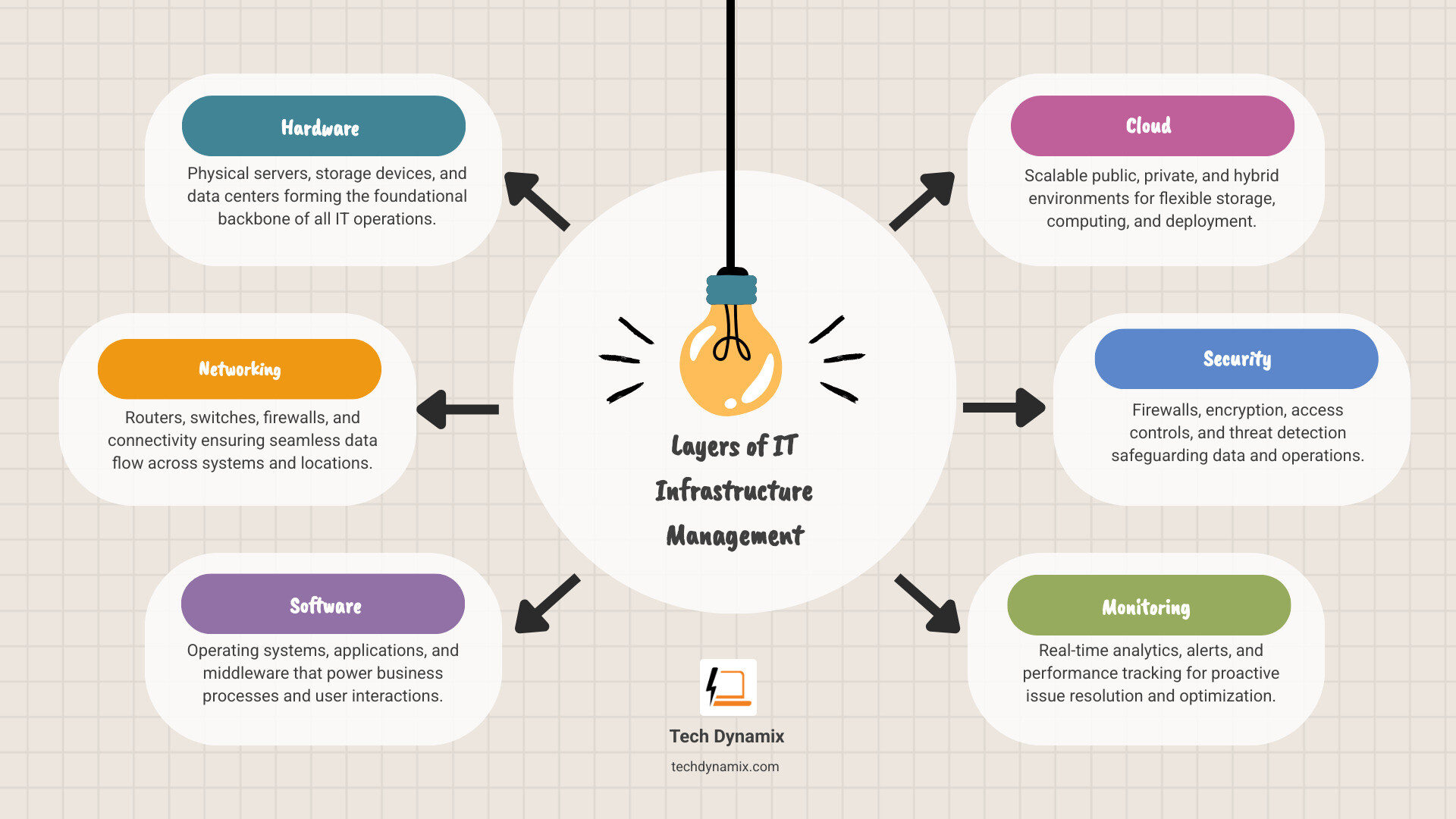
It infrastructure management services companies terms to know:
Core Components of Modern IT Infrastructure Management
To choose the right partner, we first need to understand what they actually manage. In the simplest terms, IT infrastructure is the combination of hardware, software, network resources, and services required for the existence, operation, and management of an enterprise IT environment.
But what is IT infrastructure management anyway? It is the proactive oversight of these elements to ensure they are available, secure, and performing at peak levels.
The core components typically include:
- Hardware: Physical servers, storage arrays, and data center facilities.
- Networking: Routers, switches, firewalls, and the connectivity that allows data to flow.
- Software: Operating systems, virtualization layers (like VMware or Nutanix), and enterprise applications.
- Cloud Environments: Public (AWS, Azure), private, or hybrid setups.
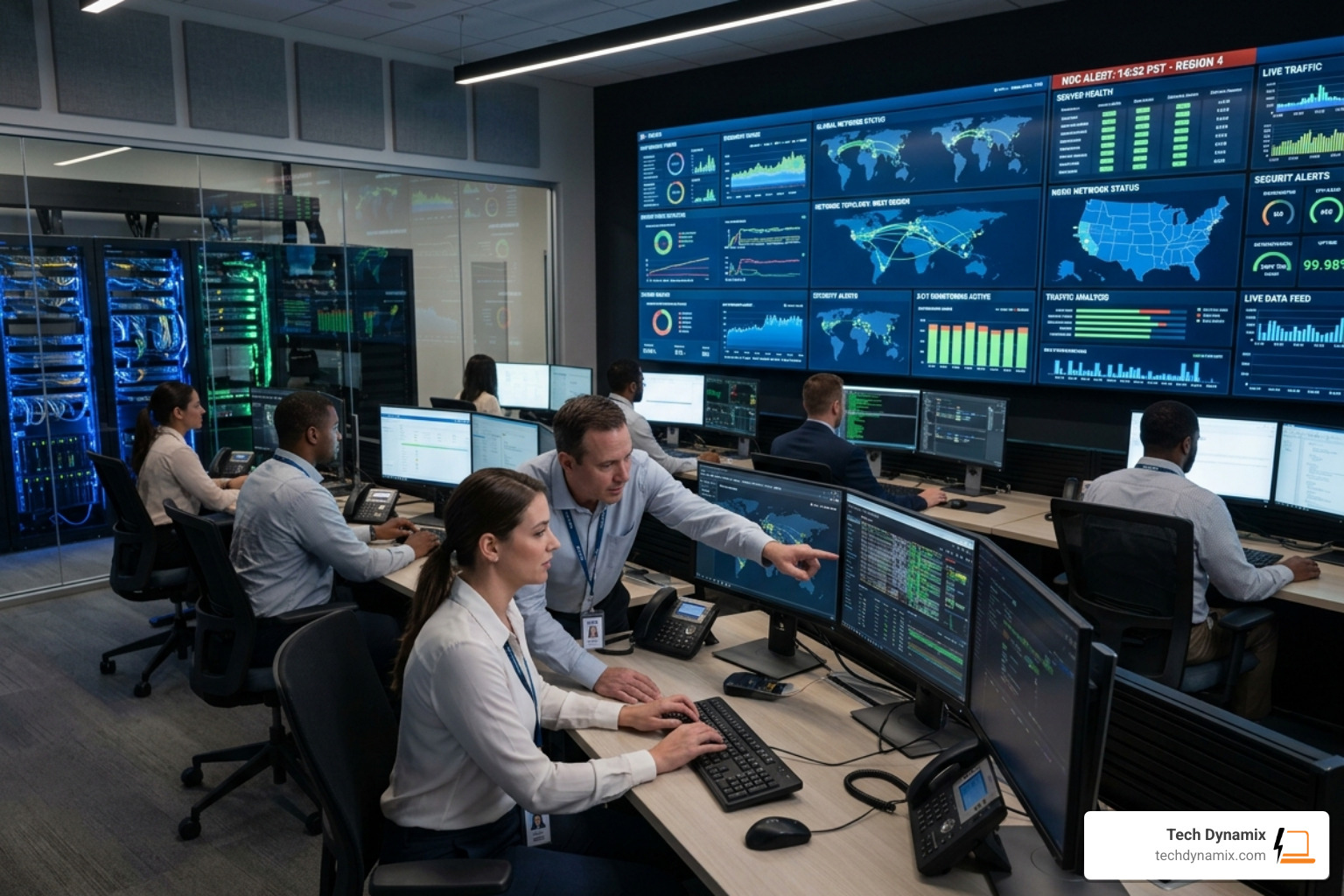
Leading it infrastructure management services companies act as a Network Operations Center (NOC), serving as your 24/7 IT watchtower. They use automated tools to spot a failing drive or a network bottleneck before it crashes your Monday morning production.
Evaluating the Core Offerings of it infrastructure management services companies
When vetting providers, you shouldn’t just look for “support.” You need a specific suite of managed services that cover the full lifecycle of your technology. Top-tier companies offer:
- 24/7 Monitoring and Incident Response: This isn’t just an alert system; it’s a triage team that resolves issues in real-time.
- Virtualization Management: Modern infrastructure relies on virtual machines. Providers help consolidate 300 physical servers into efficient virtual environments, often leading to a 20-40% reduction in IT costs.
- Cloud Management: Whether you are 100% in AWS or running a hybrid model, you need experts who can manage “Storage-as-a-Service” (STaaS) and optimize spend.
- Disaster Recovery as a Service (DRaaS): Ensuring that if a server fails in Willoughby or Eastlake, your data is synced and ready to failover within minutes.
Key Benefits of Partnering with it infrastructure management services companies
Why not just hire a bigger internal team? For many small and mid-size businesses in Northeast Ohio, the math simply doesn’t add up. The cost of hiring specialized experts for cloud, security, and networking can be astronomical.
The benefits of outsourcing to it infrastructure management services companies include:
- Scalability: You can scale your storage or compute power up or down based on business objectives without buying new hardware.
- Predictable Costs: Instead of surprise repair bills, you get a fixed monthly fee that aligns with your budget.
- Maximized Uptime: Proactive maintenance ensures services are continually available. One university, for example, cut costs by $50 million over three and a half years by simplifying their cloud journey and improving the experience for 80,000 students.
- Closing the Skill Gap: 51% of executives say they lack the internal skills to modernize their infrastructure. Outsourcing gives you instant access to a “deep bench” of certified engineers.
Research shows that 82% of all companies fully achieving their cloud outcomes are using managed services to a moderate or great degree. It’s hard to ignore that correlation. If you want to see how this fits into a broader strategy, check out our Managed IT Services Complete Guide.
Security and Compliance in Complex Environments
In 2026, security is no longer an “add-on” — it is the foundation. It infrastructure management services companies now integrate security-by-design into every layer of the stack.
For businesses in regulated sectors like healthcare or finance in the Greater Cleveland Area, compliance is non-negotiable. Providers ensure your infrastructure meets standards like SOC 2, ISO 27001, HIPAA, and PCI DSS. This includes:
- Cyber Resilience: Using Active Directory backups and immutable storage to ensure you can recover from ransomware in hours, not weeks.
- Threat Protection: 24/7 managed security powered by a Security Operations Center (SOC) to block DNS threats and unauthorized access.
- Governance: Regular service reviews to ensure your environment stays secure as new employees join and old systems are retired.
For a deeper dive into local requirements, see The Comprehensive Guide to Ohio Managed IT and Network Security.
2026 Trends: AI, Edge Computing, and Hybrid Cloud
The landscape of 2026 looks very different than it did just a few years ago. We are seeing a massive shift toward “self-healing” infrastructure that uses AI to predict and respond to business needs.
- 90% of organizations are planning to adopt a hybrid cloud strategy. This means blending on-premise hardware with public cloud resources like Azure or AWS.
- 83% of companies believe edge computing will be essential. Edge computing moves data processing closer to where the data is created (like a manufacturing floor in Mentor or a clinic in Chardon), reducing latency and improving real-time response.
- Sustainability: Modern data centers are focusing on “high-density” power support. Some providers now offer up to 52kW per rack using patented cooling cabinets, allowing for massive AI and Machine Learning workloads without a massive carbon footprint.
Future-Proofing with it infrastructure management services companies
To stay competitive, your infrastructure must be “AI-ready.” This means having the compute power and data architecture to support generative AI platforms and advanced analytics.
However, the road is full of potholes. 34% of companies cite infrastructure as a top barrier to cloud value, and 56% say that maintaining legacy systems leaves too little money to invest in modernization.
The right it infrastructure management services companies help you “rationalize” your assets. They evaluate what you have, identify what’s holding you back, and create a roadmap to migrate mission-critical systems to the cloud while keeping your “boring” (but essential) legacy systems running smoothly in the background.
How to Select the Best Provider for Your Business
Selecting a partner is about more than just a price list. It’s about finding a company that understands your specific industry—whether that’s manufacturing in Lake County or a nonprofit in Cuyahoga County.
When evaluating it infrastructure management services companies, consider these criteria:
- Consultative Methodology: Do they start with a thorough assessment, or do they just try to sell you a pre-packaged “tier”?
- Local Expertise: For businesses in Northeast Ohio, having a provider who understands the local business climate and can provide onsite support in Painesville or Wickliffe is a huge advantage.
- Vendor Neutrality: A good provider should guide you toward the best solution for your workload (e.g., VMware vs. Nutanix), not just the one that pays them the highest commission.
- Certifications: Look for providers with a high number of certified engineers and industry accolades like the CRN MSP 500 Elite 150 list.
For more on selecting the right tech for your goals, visit our Business IT Solutions 101 page or learn about Network Design & Management.
Real-World Impact and Pricing Models
The impact of professional management is often visible on the bottom line. Take the case of a mid-sized firm that modernized its environment through cloud migration and server optimization—they didn’t just gain speed; they gained “harmonious IT” where the technology finally supported the business instead of hindering it. Another organization in the education sector saw $50 million in savings over 42 months by moving to a managed enterprise cloud model.
Pricing Models in 2026:
- Modular/Tiered: You pay for what you need (e.g., Base monitoring vs. Full management).
- Pay-as-you-go (STaaS/IaaS): You pay for the storage and compute you actually use, similar to a utility bill.
- Predictable Monthly Fee: A “flat-rate” model that covers all support and maintenance, ensuring no budgetary surprises.
Frequently Asked Questions about IT Infrastructure
What are the most common pricing models for infrastructure services?
Most it infrastructure management services companies use a tiered model (Base, Plus, Full) or a per-device/per-user monthly fee. Cloud-heavy environments often use a consumption-based model where you pay for actual resources used, which helps ensure costs stay predictable even as you scale.
How do providers ensure 24/7 uptime in 2026?
Providers use a combination of AIOps (Artificial Intelligence for IT Operations) and global Enterprise Operation Centers (EOCs). These systems can predict hardware failures before they happen and automatically reroute traffic or failover to redundant systems in different geographic regions.
Why is edge computing becoming a standard requirement?
As businesses adopt more AI, IoT, and real-time data processing, sending all that data to a central cloud server creates “lag” or latency. Edge computing processes data locally (at the “edge” of the network), which is essential for things like autonomous warehouse robots or real-time medical imaging.
Conclusion
Choosing from the many it infrastructure management services companies available is one of the most important strategic decisions your business will make this year. The right partner doesn’t just “fix computers”—they build a resilient, scalable foundation that allows you to stop worrying about downtime and start focusing on innovation.
At Tech Dynamix, we specialize in providing this high-quality oversight for small and mid-size businesses throughout Northeast Ohio. From Mentor and Willoughby to Chardon and Ashtabula, our team brings over 20 years of local expertise to the table. We don’t believe in “one-size-fits-all” IT; we believe in building partnerships that drive real business results.
Ready to see how a modern infrastructure can transform your business? Explore our full range of Services and let’s build a technology roadmap that works for you.