Understanding Cloud Based Data Centers in Today’s Digital Landscape
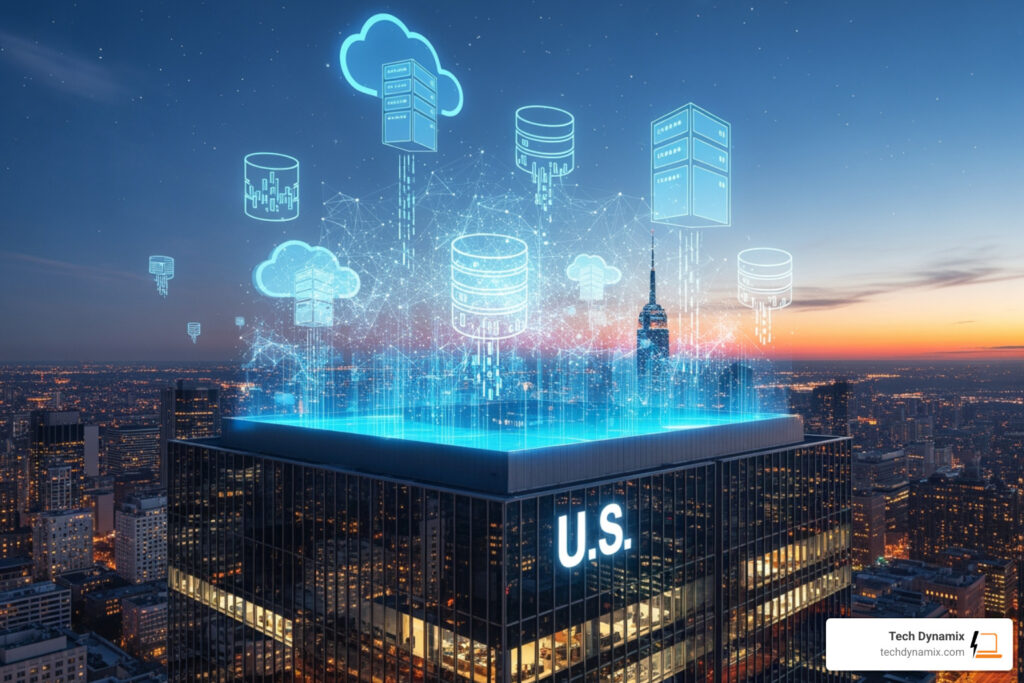
A cloud based data center is a virtual, off-site facility where your organization’s data and applications are managed through internet-connected infrastructure leased from a third-party provider.
Key Characteristics:
- Virtual and off-site – No physical servers in your office.
- Third-party managed – Providers handle maintenance and SLAs.
- Internet-accessible – Access resources from anywhere.
- On-demand provisioning – Scale compute and storage as needed.
- API-driven – Automate infrastructure through code.
The shift from physical rooms like the 1945 ENIAC to modern hyperscale facilities has transformed business. Today, the data center industry grows at 10% annually, with global construction spending reaching $49 billion. Businesses are moving to the cloud to gain flexibility and reduce costs.
I’m Jay Baruffa, and for over 20 years, I’ve helped Northeast Ohio businesses transition to cloud based data center solutions. At Tech Dynamix, we evaluate your unique requirements to create secure, scalable strategies that improve efficiency.
What is a Cloud Based Data Center?
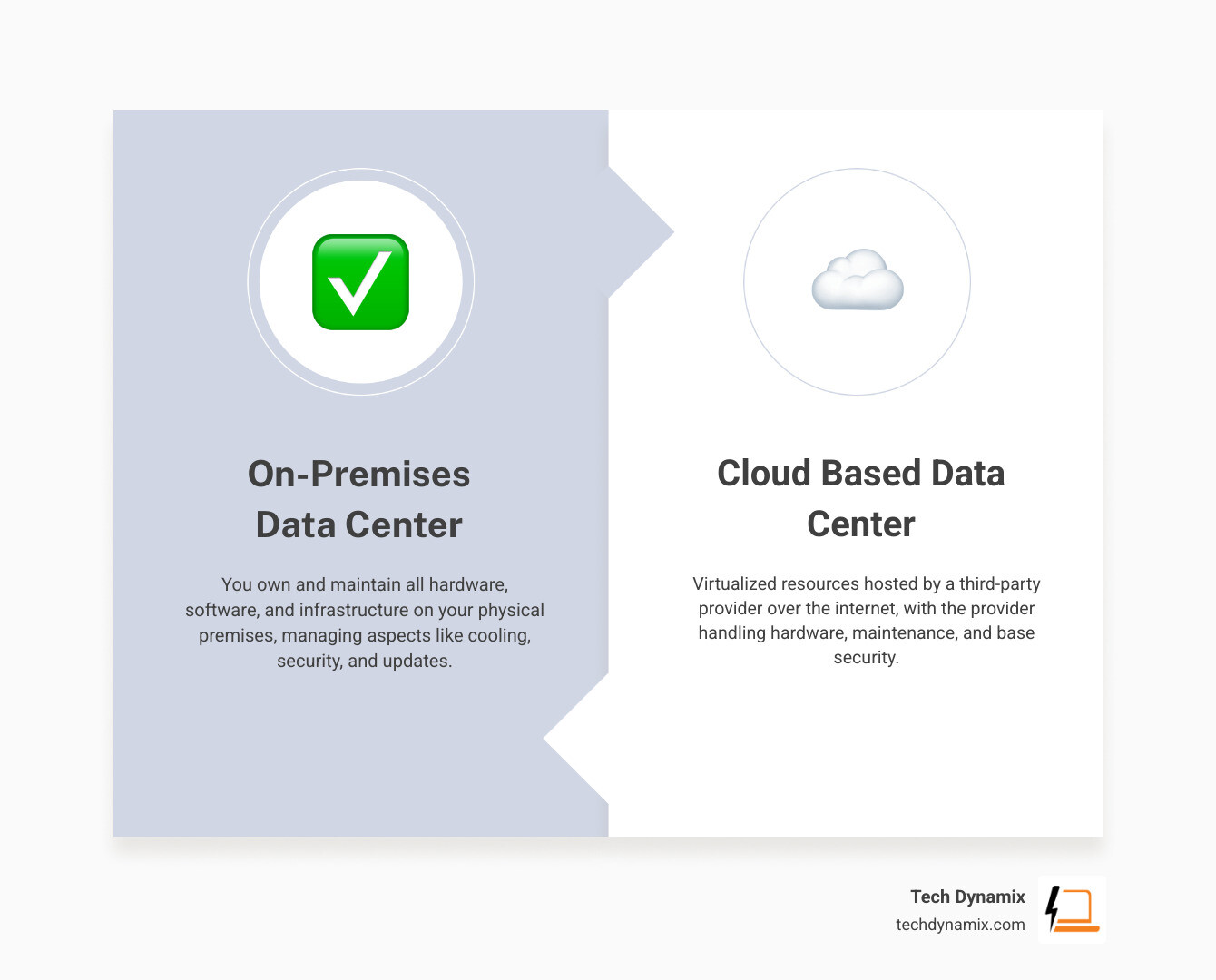
At its core, a cloud based data center isn’t a single physical building you can point to and say, “There it is!” Instead, it’s a vast network of interconnected physical data centers, managed by a cloud service provider, that delivers computing resources to users over the internet. Think of it as a utility, much like electricity or water. You don’t own the power plant, but you use its resources on demand.
The key difference from traditional on-premises data centers is this virtualization and abstraction of hardware. In a traditional setup, your business in Northeast Ohio would own, operate, and maintain all the servers, storage, networking equipment, and cooling systems within your own facility. You’d be responsible for everything from buying hardware to paying the electricity bill and managing security.
With a cloud based data center, we lease infrastructure from a third-party provider. This means the cloud provider is responsible for installing, updating, maintaining, and meeting service-level agreements (SLAs) for the underlying physical infrastructure. Your data and applications “live” virtually within this provider’s infrastructure, accessible from anywhere with an internet connection. This model allows businesses to provision compute, storage, and applications on-demand, often through intuitive web interfaces or powerful APIs.
This shift isn’t just about location; it’s about responsibility and flexibility. We get to focus on what matters most for your business—your applications and data—while the cloud provider handles the heavy lifting of managing the physical infrastructure. This approach is a cornerstone of modern digital transformation services, enabling businesses to innovate faster and respond to market changes with unprecedented agility. To learn more about the robust infrastructure that underpins these services, you can explore resources like the AWS Data Center Overview.
The Evolution and Future of Data Center Infrastructure
Data centers have evolved from the massive ENIAC machines of the 1940s to the microcomputers of the 1990s, and finally to the cloud revolution of the early 2000s. Google’s 2006 launch of the first hyperscale data center marked a new era of unprecedented scale.
McKinsey & Company projects the industry to grow 10% annually through 2030, fueled by AI, IoT, and massive data volumes. A major focus of this growth is sustainability. Modern providers like Google match 100% of their energy consumption with renewable energy, using hyper-efficient systems that consume 50% less power than traditional setups. Companies like Vantage Data Centers also prioritize site selection to mitigate natural risks.
For Northeast Ohio businesses, understanding these trends is vital. We provide IT consulting and advisory services to ensure your technology investments align with future industry directions.
Core Components of Modern Cloud Infrastructure
Cloud based data centers rely on virtualization, automation, and intelligent networking to deliver resources globally.
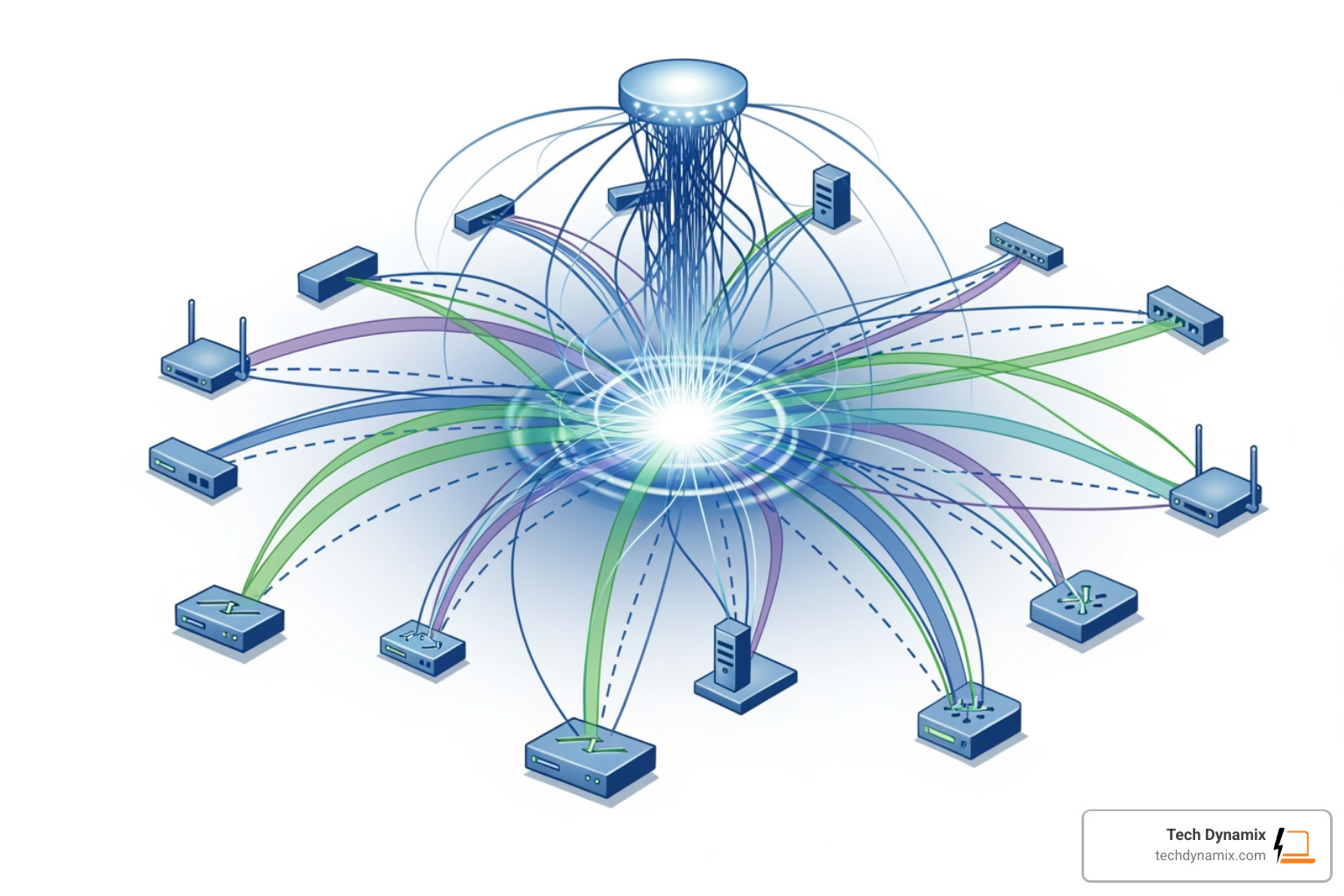
Two fundamental service models include:
- Infrastructure as a Service (IaaS): Provides virtual machines, storage, and networks. You manage the OS and applications, while the provider handles the hardware.
- Platform as a Service (PaaS): Offers a complete development environment. You focus on coding while the provider manages the underlying infrastructure and tools.
Software-Defined Networking (SDN) further improves this by separating the network’s control plane from the data plane, allowing for programmatic management. Global networks like Google Cloud Infrastructure exemplify this agility.
Frameworks Enabling the Cloud Based Data Center
Infrastructure as Code (IaC) allows us to manage infrastructure using scripts rather than manual processes, offering:
- Automation: Speeds up deployment and reduces errors.
- Consistency: Ensures identical environments every time.
- Version Control: Tracks changes and enables collaboration.
- Scalability: Works with APIs to scale resources automatically based on demand.
Our network design and management services leverage these principles to build resilient environments for Northeast Ohio businesses.
Global Architecture: Regions and Availability Zones
Cloud providers like AWS and IBM Cloud use a structured global architecture:
- Regions: Geographically distinct locations chosen for proximity to users and compliance.
- Availability Zones (AZs): Isolated data centers within a region with independent power and cooling. This ensures high availability; if one AZ fails, others remain operational.
These zones are connected via high-bandwidth fiber, allowing for synchronous data replication. The Microsoft network, for example, connects over 60 regions and 300 datacenters. Explore more at Microsoft Datacenters.
Security and Reliability in a Cloud Based Data Center
Cloud providers invest heavily in security and redundancy, often exceeding what small businesses can achieve on-premises. IBM Cloud, for instance, offers resilient, highly available infrastructure globally. Learn more at IBM Cloud Global Data Centers.
Layered Security in a Cloud Based Data Center
AWS and other providers use a multi-layered security model:
- Perimeter Layer: Physical access control using fencing, guards, and biometrics.
- Infrastructure Layer: Protects servers and networking equipment with redundant power and fire suppression.
- Data Layer: Protects information through encryption (at rest and in transit), access controls, and the principle of least privilege.
- Environmental Layer: Site selection to avoid floodplains and seismic zones, plus constant environmental monitoring.
Our cybersecurity solutions complement these cloud measures to provide end-to-end defense.
Ensuring High Availability and Business Continuity
Cloud infrastructure is built for redundancy and fault tolerance:
- Load Balancing: Distributes traffic across healthy servers to prevent downtime.
- Disaster Recovery: Automated replication across regions ensures quick restoration after major events.
- Automated Backups: Built-in features safeguard data more reliably than manual solutions.
Providers like Vantage maintain high customer loyalty due to this operational excellence. For our Northeast Ohio clients, we emphasize backup and business continuity plans that leverage these cloud capabilities.
Choosing Between On-Premises and Cloud Solutions
The choice between on-premises and cloud depends on your needs for cost, control, and scalability.
- Cost: On-premises requires high upfront CapEx, while cloud uses a predictable, pay-as-you-go OpEx model.
- Scalability: Cloud offers rapid elasticity, whereas on-premises scaling requires slow hardware purchases.
- Security: On-premises offers total physical control; cloud offers enterprise-grade security but requires a shared responsibility model.
- Maintenance: Cloud providers handle hardware updates, freeing your IT team for strategic tasks.
| Feature | On-Premises Data Center | Public Cloud Data Center |
|---|---|---|
| Physical Location | Local facilities | Off-site, third-party managed |
| Responsibility | Internal IT manages all | Provider manages hardware |
| Cost Model | Capital Expenditure (CapEx) | Operational Expenditure (OpEx) |
| Scalability | Slow and expensive | Rapid and on-demand |
| Control | Maximum physical control | Virtual resource control |
| Backup & Recovery | Manual/Self-managed | Built-in and automated |
Many Northeast Ohio businesses find success with a hybrid approach. Our managed IT services help you determine the best path for your organization.
Frequently Asked Questions about Cloud Data Centers
What is the difference between a region and an availability zone?
A Region is a large geographic area (like a city). An Availability Zone (AZ) is an isolated data center within that region. Deploying across multiple AZs ensures your application stays online even if one data center fails.
How do cloud data centers ensure environmental sustainability?
Cloud providers use advanced cooling, optimized hardware, and renewable energy. Google, for example, matches 100% of its energy use with renewables and operates facilities that are 50% more efficient than traditional data centers.
Is a cloud data center more cost-effective than on-premises hardware?
Generally, yes. It reduces CapEx, eliminates the costs of power and cooling, and provides access to enterprise-grade infrastructure without the massive investment required for on-premises setups. It also allows your IT staff to focus on business growth rather than hardware maintenance.
Conclusion
The journey into the cloud based data center reveals a landscape of immense innovation, efficiency, and opportunity. From the earliest computing behemoths to today’s hyperscale, globally interconnected networks, the evolution of data centers has consistently aimed at making computing more powerful, accessible, and resilient. For businesses in Northeast Ohio, this shift represents more than just a technological upgrade; it’s a fundamental change in how we approach IT, enabling unprecedented scalability, speed-to-market, and operational excellence.
We’ve explored how cloud data centers differ from traditional on-premises solutions, the core components like IaaS and PaaS that power them, and the intricate global architecture of regions and availability zones that ensure your data is always available. We’ve also digd into the robust, multi-layered security measures and the commitment to sustainability that define modern cloud infrastructure.
The decision to accept a cloud based data center strategy is a strategic one, impacting everything from your budget to your competitive edge. It’s about optimizing resources, enhancing security, and empowering your team to focus on innovation rather than infrastructure maintenance.
At Tech Dynamix, we are passionate about helping businesses steer this digital change. Our expertise in IT consulting, managed services, cybersecurity, and cloud solutions means we’re perfectly positioned to guide your organization through the complexities of cloud adoption. Whether you’re considering a full migration, a hybrid approach, or simply want to optimize your existing cloud setup, we’re here to ensure your technology strategy aligns seamlessly with your business goals.
Ready to open up the full potential of cloud based data centers for your business? Explore our comprehensive IT services and let us help you build a more agile, secure, and future-ready IT environment.