Why Disaster Recovery Ohio Planning Can’t Wait
Disaster recovery Ohio businesses need starts long before a storm hits — or a server fails.
Here’s a quick overview of what to do when disaster strikes in Ohio:
- Document all damage with photos and videos before removing anything
- Contact your insurance agent to start your claim right away
- Apply for FEMA assistance at DisasterAssistance.gov or call 800-621-3362
- Reach out to Ohio EMA for state-level recovery programs and technical help
- Contact your IT provider to begin restoring systems and data
Ohio businesses face real, recurring threats. Flooding is the most frequently occurring natural disaster in the state. Tornadoes, winter storms, and cyber incidents add to the risk. In March 2024, President Biden declared a major disaster for 11 Ohio counties after a tornado outbreak — a stark reminder that disruption can happen fast and without warning.
And when IT systems go down, the clock starts ticking immediately. Industry studies show that even a single hour of downtime can cost a business thousands of dollars — before you factor in lost customers, reputational damage, or regulatory exposure.
Most Ohio business leaders don’t have a clear plan for what comes next. This guide walks you through exactly how to prepare, respond, and recover.
I’m Jay Baruffa, founder of Tech Dynamix, and with over 20 years of experience in IT infrastructure and disaster recovery Ohio businesses depend on, I’ve helped countless Northeast Ohio organizations build resilient systems that keep them running when things go wrong. Let’s break down what you need to know.
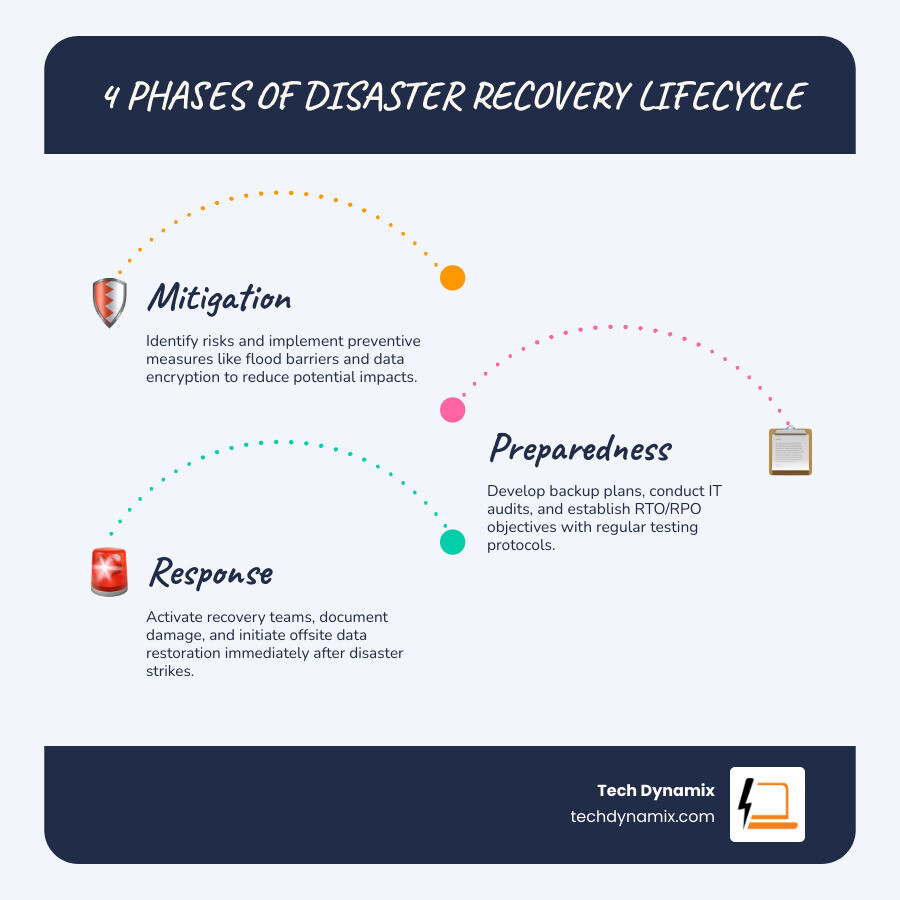
Disaster recovery Ohio vocab explained:
Understanding the Risks: Common Threats and Disaster Recovery Ohio
When we talk about disaster recovery Ohio, we aren’t just talking about the “big one.” While a massive tornado makes the evening news, smaller, more frequent events can be just as devastating to a local business in Mentor or Willoughby.
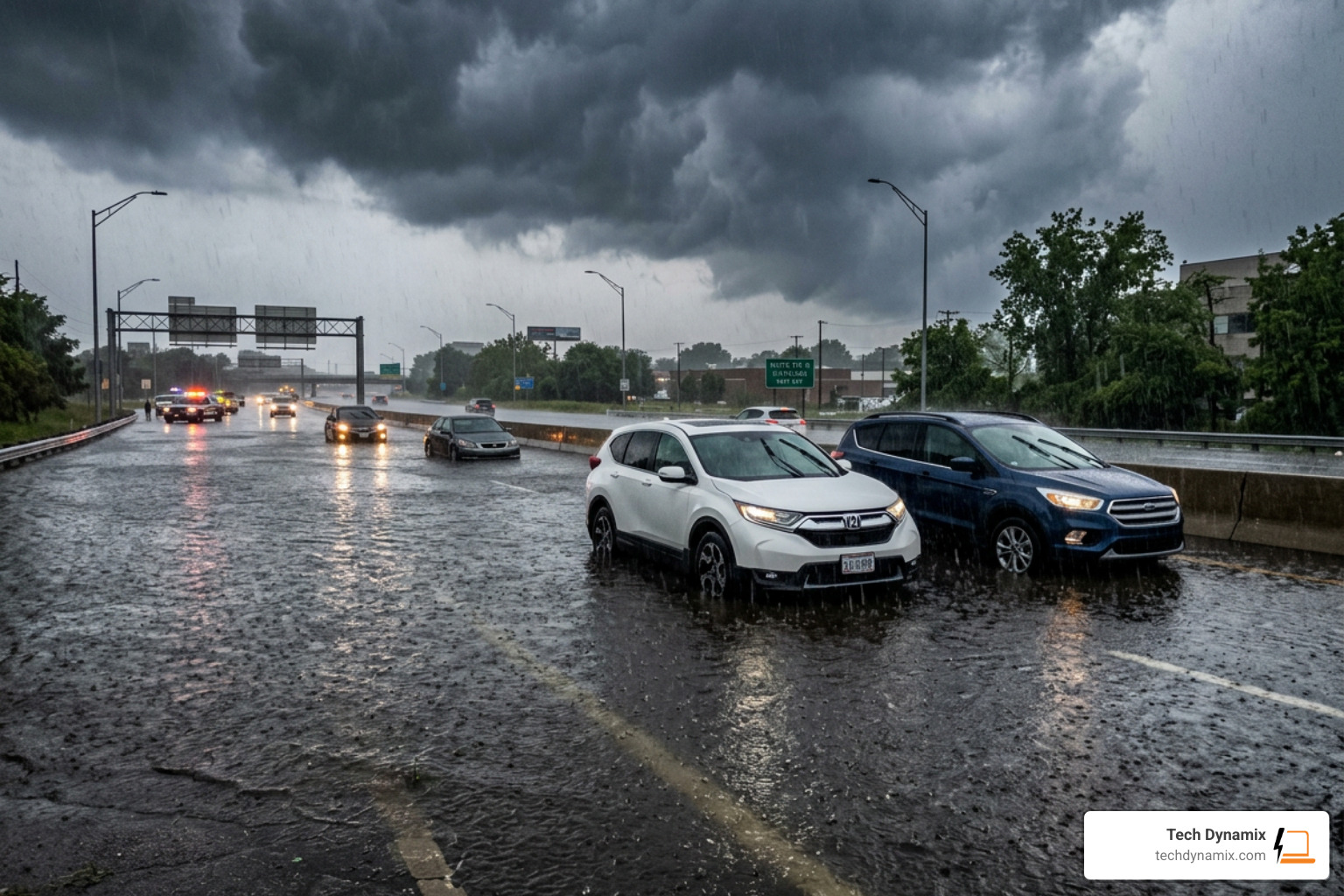
According to the 2024 State of Ohio Hazard Mitigation Plan, flooding is the most frequent natural disaster in our state. But it’s far from the only threat. Ohio’s geography makes us susceptible to a wide range of issues that can knock your business offline.
The 2024 Tornado Outbreak
On March 14, 2024, a series of powerful tornadoes ripped through the state. Governor Mike DeWine declared a State of Emergency, and President Joseph R. Biden, Jr. later issued a major disaster declaration. This opened up federal assistance for 11 counties: Auglaize, Crawford, Darke, Delaware, Hancock, Licking, Logan, Mercer, Miami, Richland, and Union. While our primary service area in Northeast Ohio (like Lake and Geauga counties) was spared the worst of that specific event, it serves as a wake-up call for how quickly a “normal” Thursday can turn into a recovery operation.
High-Priority Hazards in Ohio
The Ohio Emergency Management Agency (EMA) identifies several high-priority hazards. Here is how they stack up:
| Hazard Type | Priority Level | Potential Business Impact |
|---|---|---|
| Flooding | Highest | Property damage, inventory loss, long-term closure |
| Tornadoes | Highest | Total structural loss, prolonged power outages |
| Winter Storms | Highest | Supply chain disruption, burst pipes, inaccessible offices |
| Cyber Incidents | High | Data theft, ransomware lockouts, reputational ruin |
| Landslides | Moderate | Specific to hilly regions; can sever utility lines |
Beyond natural disasters, we have to consider human-caused events. Cyber incidents are becoming a leading cause of disaster declarations for businesses. Whether it’s a ransomware attack or a simple hardware failure, if you can’t access your data, your business is effectively “closed.”
Assessing Your Disaster Recovery Ohio Needs
Before you can build a defense, you need to know what you’re defending. We always recommend starting with a comprehensive risk assessment. This isn’t just about looking at the weather; it’s about looking at your IT infrastructure, your physical location, and your workflows.
To get started, you need to define two critical metrics:
- Recovery Time Objective (RTO): This is the maximum amount of time your business can be “down” before the damage becomes irreversible. If your RTO is four hours, your recovery plan must be able to get you back up and running within that window.
- Recovery Point Objective (RPO): This refers to data loss. If your last backup was 24 hours ago and your server dies, you’ve lost a full day of work. Is that acceptable? If not, your RPO needs to be shorter (e.g., 15 minutes or 1 hour).
At Tech Dynamix, we perform IT audits for businesses across Northeast Ohio to help them keep Ohio running with essential business continuity planning. We look for “single points of failure”—that one old server in the closet or that one unmapped drive—that could bring everything to a screeching halt.
Implementing a Data Backup and Disaster Recovery Ohio Strategy
A “backup” is not a “disaster recovery plan.” A backup is just a copy of your data. Disaster recovery Ohio is the process of using that copy to get back to work.
We follow the “3-2-1” rule:
- Keep 3 copies of your data.
- Store them on 2 different types of media.
- Keep 1 copy offsite.
For businesses in the Greater Cleveland Area, “offsite” shouldn’t just mean the owner’s basement in Chardon. It should mean a secure, encrypted cloud environment. By leveraging your Ohio cloud connection for premier IT services, you ensure that even if your physical office is inaccessible due to a fire or flood, your team can work remotely using Microsoft 365 or cloud-hosted applications.
Testing is the most overlooked step. A backup is only good if it actually restores. We implement automated testing protocols that verify the integrity of your data daily. If a recovery fails the test, we know immediately—not when the actual disaster hits.
Navigating Federal and State Assistance Programs
If your business is hit by a major event, you don’t have to go it alone. There is a network of support available, but you have to know which doors to knock on.
FEMA and DisasterAssistance.gov
FEMA is the big player here. When a presidential declaration is made, businesses and homeowners can apply for assistance. The fastest way is via DisasterAssistance.gov. You can also call (800) 621-3362. If you have a speech disability or hearing loss and use a TTY, call (800) 462-7585.
SBA Disaster Loans
The Small Business Administration (SBA) offers low-interest disaster loans to businesses of all sizes. These aren’t just for physical damage; “Economic Injury Disaster Loans” (EIDL) can help you cover operating expenses that you could have paid had the disaster not occurred. You can find more information at www.sba.gov/funding-programs/disaster-assistance.
Ohio EMA and the State Disaster Relief Program
The Ohio Emergency Management Agency (EMA) manages the State Disaster Relief Program (SDRP). This is a reimbursement program that can provide financial assistance to local governments and eligible non-profits when federal assistance isn’t available. They also provide technical assistance to public officials regarding emergency management.
Community Lifelines
Ohio uses the “Community Lifelines” framework to guide response. These are the seven most essential services:
- Safety and Security
- Food, Water, Shelter
- Health and Medical
- Energy
- Communications
- Transportation
- Hazardous Material
During a recovery, the state prioritizes stabilizing these lifelines first. As a business owner, understanding this helps you manage expectations—if the “Energy” or “Communications” lifelines are down in your county, your private IT recovery might be delayed until the grid is stable.
Long-Term Recovery and MVRPC
For long-term support, organizations like the Miami Valley Regional Planning Commission (MVRPC) and various Long-Term Recovery Committees (LTRCs) work to address unmet needs months or even years after the event. They coordinate volunteer efforts and help navigate complex funding streams.
While navigating these government programs, it’s helpful to have your IT house in order. We often work with our clients to provide the documentation and “proof of loss” data needed for these applications. You can learn more info about managed IT services and how we support businesses during these transitions.
Protecting Your Bottom Line: Business Continuity and Insurance
The goal of disaster recovery Ohio is to minimize the “gap” between the disaster hitting and your business making money again.
The True Cost of IT Downtime
We can’t stress this enough: downtime is expensive. According to scientific research on the hourly cost of downtime, even small businesses can lose thousands per hour.
Beyond the immediate lost sales, you have:
- Employee Morale: Constant IT issues frustrate your team and lead to turnover.
- Reputational Damage: If a customer can’t reach you or their data is compromised, they may head to a competitor.
- Regulatory Penalties: For healthcare or financial services, downtime can lead to compliance violations.
Navigating Insurance Claims
When filing a claim, speed and documentation are your best friends.
- Notify your agent immediately. Don’t wait.
- Take photos and videos. Capture everything before you start cleaning up.
- Make temporary repairs. Only do what is necessary to prevent further damage (like tarping a roof), and keep every single receipt.
- Check for “Loss of Use” or “Business Interruption” coverage. This can be a lifesaver, helping to cover lost income and even temporary relocation costs.
The Role of CPAs and Advisors
CPAs play a massive role in disaster recovery Ohio. They act as trusted advisors, helping businesses calculate the financial impact for insurance and tax purposes. Speaking of taxes, the IRS often provides relief for disaster victims. For example, after the March 2024 tornadoes, the IRS postponed various tax filing and payment deadlines to September 3, 2024, for affected taxpayers.
At Tech Dynamix, we provide the technical side of this coin, ensuring you have the data backups to prove what you had before the disaster. For more details on how we bridge the gap between IT and business survival, check out more info about backup and business continuity services.
Frequently Asked Questions about Ohio Disaster Relief
How do I apply for FEMA disaster assistance in Ohio?
The most efficient way to apply is online at DisasterAssistance.gov. You can also use the FEMA mobile app or call (800) 621-3362. You will need your Social Security number, insurance information, a description of the damage, and financial information. It is highly recommended to upload your documents online to speed up the process.
Which Ohio counties were eligible for assistance after the 2024 tornadoes?
The major disaster declaration following the March 14, 2024, tornadoes specifically included:
- Auglaize
- Crawford
- Darke
- Delaware
- Hancock
- Licking
- Logan
- Mercer
- Miami
- Richland
- Union
What steps should I take when filing an insurance claim?
First, ensure your safety. Once safe, document all damage with high-quality photos and video. Call your insurance agent as soon as possible to start the claim. Keep a detailed log of every conversation you have with insurance adjusters. Do not throw away damaged items until the adjuster has seen them, unless they pose a health hazard. Finally, use written estimates from reputable contractors to back up your claim.
Conclusion
Disaster recovery Ohio isn’t a “set it and forget it” task. It’s a living strategy that evolves as your business grows and as new threats emerge. Whether it’s a tornado in Logan County or a server failure in Mentor, the businesses that survive are the ones that planned for the worst while working for the best.
At Tech Dynamix, we’ve spent two decades serving as the technology backbone for small and mid-size businesses across Northeast Ohio—from Lake County to Cuyahoga and beyond. We don’t just sell backups; we provide peace of mind. We ensure your data is secure, your systems are redundant, and your team is ready to work from anywhere, no matter what the Ohio weather throws at us.
Don’t wait for the next storm warning to wonder if your data is safe. Contact our Microsoft 365 and cloud support team today, and let’s build a disaster recovery plan that keeps your business running, rain or shine.