Why Managed Private Cloud Matters for Business Leaders
Managed private cloud is a single-tenant cloud computing environment where your organization’s data and applications run on dedicated infrastructure, managed entirely by a third-party provider. Unlike public clouds where resources are shared, or hybrid setups that mix both, managed private cloud gives you full resource isolation with expert oversight—no internal IT burden required.
Quick Definition:
- Single-tenant environment – Your infrastructure, nobody else’s
- Dedicated resources – Compute, storage, and networking exclusively for your organization
- Third-party management – Provider handles maintenance, monitoring, and updates
- Infrastructure as a Service (IaaS) – You control applications, they control infrastructure
- Improved security and compliance – Ideal for regulated industries like healthcare and finance
For Northeast Ohio businesses facing cybersecurity threats and cloud complexity, managed private cloud offers a middle path. You get the control and security of on-premises infrastructure without the headache of managing it yourself. Your provider handles everything from hardware maintenance to 24/7 monitoring, letting you focus on what matters—running your business.
According to recent industry data, ransomware attacks impacted at least 89 education organizations in 2022 alone, highlighting the urgent need for secure, resilient infrastructure. Organizations in financial services, healthcare, and government are increasingly turning to managed private cloud to meet strict data residency and compliance requirements while maintaining operational efficiency.
I’m Jay Baruffa, and over my 20+ years in IT infrastructure design and systems support, I’ve helped businesses across Northeast Ohio transition to secure, scalable cloud environments that reduce risk and improve efficiency. At Tech Dynamix, we specialize in managed private cloud solutions that give you enterprise-grade security without enterprise-level complexity.
What is a Managed Private Cloud?
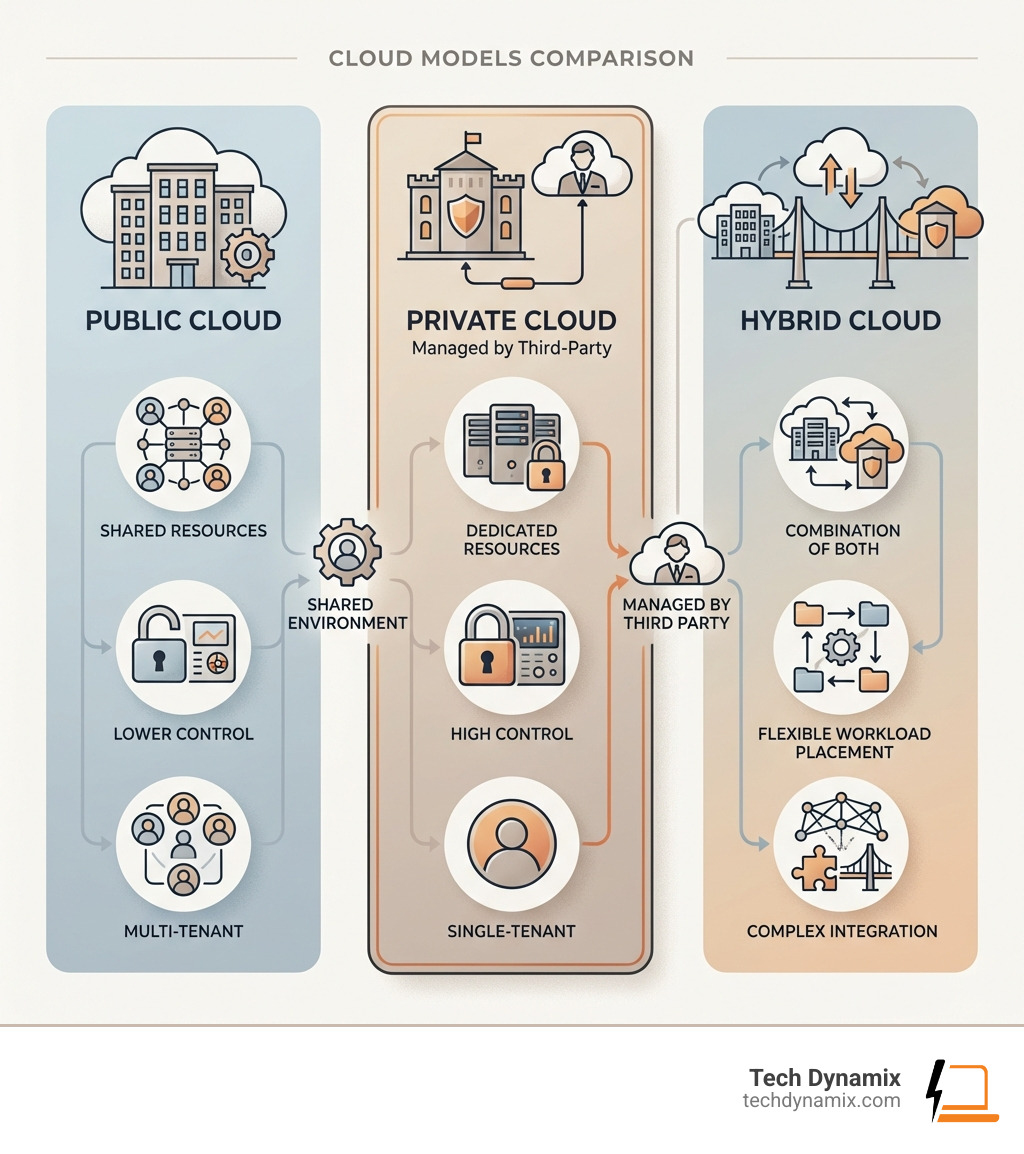
At its core, a managed private cloud is an IT infrastructure solution designed to deliver the benefits of cloud computing, such as scalability and flexibility, within a dedicated, single-tenant environment. This means that unlike a public cloud where resources are shared among multiple users (multi-tenancy), your organization gets exclusive access to all the underlying hardware and software. Think of it as having your own private, luxurious apartment in a cloud building, where all the maintenance and upkeep are handled by a dedicated concierge service.
The concept revolves around a principle in software architecture: a single instance of software runs on a server, serving only one client organization, and is managed by a third party. This third-party provider, like us at Tech Dynamix, takes on the responsibility for hardware, preliminary maintenance, and the ongoing management of the cloud environment. This setup is often referred to as ‘hosted private cloud’ or ‘single-tenant SaaS’ in some contexts. You can find more details about its definition here.
The dedication of resources is a major differentiator. From compute power and storage to networking components, everything is isolated and exclusively allocated to your business. This isolation not only improves performance but also provides a robust foundation for security and compliance, which is crucial for many businesses in Northeast Ohio. The provider handles the complex task of hardware maintenance, upgrades, and ensuring the infrastructure runs smoothly, freeing up your internal IT team to focus on strategic initiatives rather than day-to-day operational burdens.
Enterprises often choose managed private cloud when they need a dedicated service and infrastructure for business-critical operations, improved security, and better control over their resources. It allows them to avoid the management, maintenance, or future upgrade costs typically associated with on-premises data centers, effectively outsourcing these responsibilities to experts. For a deeper dive into how expert advice can shape your IT strategy, explore More info about IT Consulting & Advisory.
Managed Private Cloud vs. Public and Hybrid Models
Understanding where managed private cloud fits into the broader cloud landscape requires a clear comparison with its counterparts: public and hybrid clouds. Each model offers distinct advantages and caters to different business needs.
Public Cloud: Imagine a massive, shared apartment complex where many tenants live. Public cloud providers like Amazon Web Services (AWS), Microsoft Azure, or Google Cloud Platform manage the underlying computing resources, and these resources are shared among numerous users. The provider is responsible for maintenance and guarantees availability, reliability, and security through service-level agreements. Users access services on an as-needed basis, paying only for what they consume, without owning any physical data centers. While public clouds offer immense scalability and a vast array of services, the multi-tenancy model means less control over the physical infrastructure and data residency.
Private Cloud: This is your dedicated apartment, either managed by your own IT team (on-premises private cloud) or by a third-party (managed private cloud). The infrastructure is exclusively for your organization. This offers maximum control, security, and customization. However, if managed internally, it comes with the significant overhead of infrastructure management, maintenance, and upgrade costs.
Managed Private Cloud: This is where the best of both worlds often meet for businesses in Northeast Ohio. You retain the dedicated, single-tenant environment of a private cloud, but the burden of managing and maintaining the infrastructure is shifted to an expert third-party provider. This approach combines the advantages of a public cloud, such as efficient support and management, with the security and control of a private environment. It cuts down on upkeep costs by outsourcing infrastructure management and maintenance. For example, our managed private cloud services deliver enterprise-grade infrastructure management with flexibility and scalability in mind, custom to your business needs.
Hybrid Cloud: This model seamlessly integrates a company’s public and private clouds, allowing data and applications to run across multiple environments without noticing a difference. It’s like having your private apartment but also access to shared amenities in the complex when you need them. A common use case is using a hybrid cloud to handle traffic spikes by allowing private cloud applications to access public cloud resources. While offering operational flexibility and workload mobility, hybrid clouds can also introduce complexities in integration and management. Our team can help you steer these complexities, including supporting services like More info about Microsoft 365 Cloud Support.
The choice between these models often boils down to factors like data sensitivity, regulatory compliance, control requirements, and budget. While public clouds offer broad services and cost-effectiveness for general workloads, managed private cloud shines for organizations that demand dedicated resources, stringent security, and predictable performance without the operational burden. According to a Cloud Computing Trends Survey, organizations continue to refine their cloud strategies, often looking for solutions that balance agility with control.
Key Components and Deployment Strategies
A robust managed private cloud offering isn’t just about dedicated hardware; it’s about the sophisticated layers of technology that make that hardware flexible, efficient, and manageable. The core components and deployment strategies are designed to optimize productivity by providing maximized security, scalability, and convenient regulatory compliance.
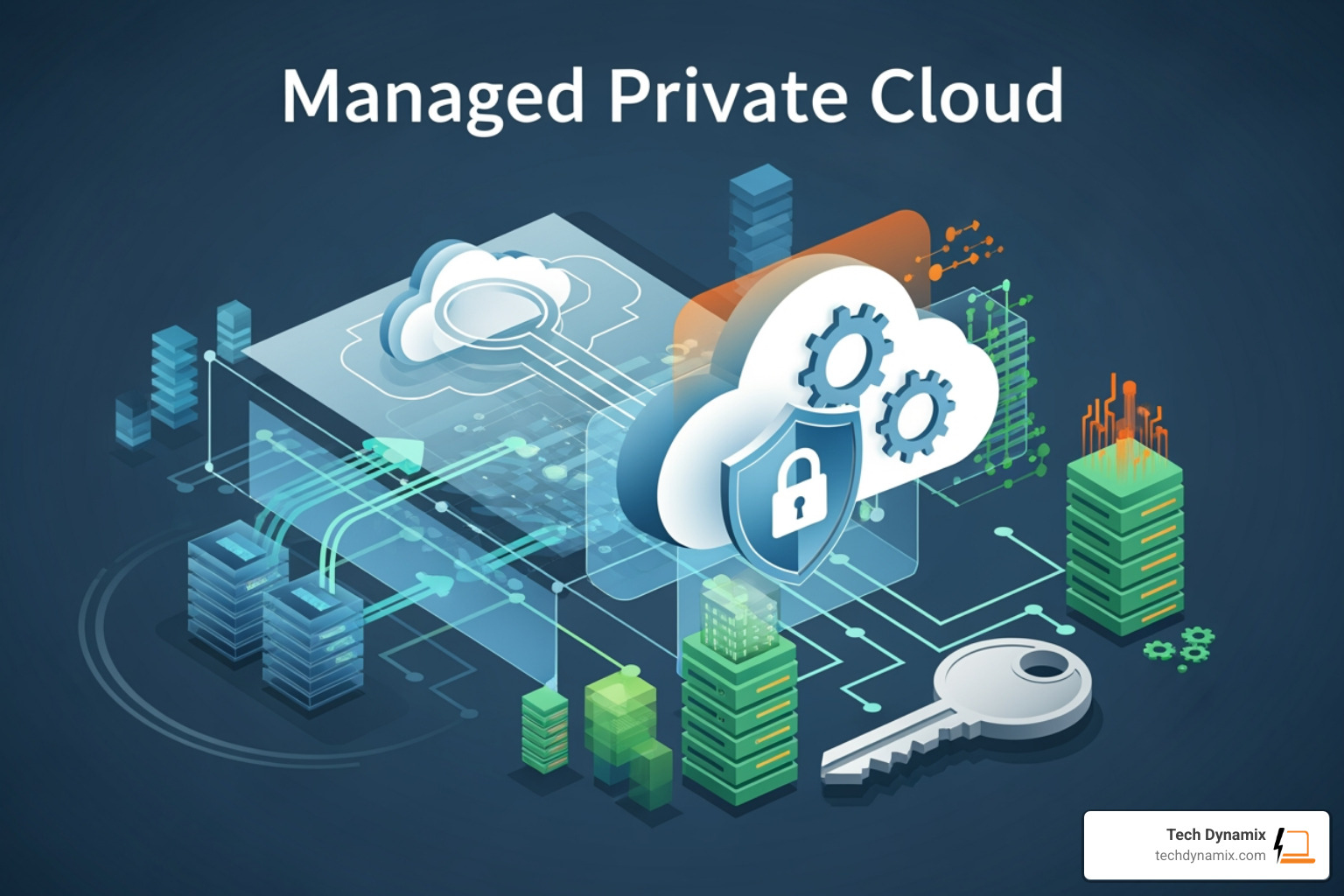
At the heart of any private cloud lies virtualization. This technology separates IT resources from the physical hardware, allowing multiple virtual machines (VMs) to run on a single physical server. This creates dedicated infrastructure as a service within your private cloud, maximizing resource utilization and providing the flexibility to provision new resources quickly.
Management software is crucial for controlling these virtualized resources. It provides a centralized interface to monitor, allocate, and configure compute, storage, and networking components. This software ensures that your dedicated resources are used efficiently and that your environment remains stable and performant.
Automation is the secret sauce that brings efficiency to a managed private cloud. By automating routine tasks like provisioning resources, deploying applications, and performing backups, we increase productivity and accuracy. This reduces the potential for human error and frees up valuable IT staff time.
When it comes to the underlying infrastructure, managed private cloud solutions can involve:
- Bare metal: Providing direct access to physical servers, offering maximum performance and control for specific workloads that don’t benefit from virtualization overhead.
- Containers: Utilizing technologies like Kubernetes to package applications and their dependencies, allowing them to run consistently across different environments. This offers the benefits of a cloud experience while keeping apps within your private environment.
- Software-defined networking (SDN): Decoupling the network control plane from the data forwarding plane, enabling dynamic, programmatic configuration of network infrastructure. This allows for rapid network changes and advanced security policies like micro-segmentation.
- vSAN storage: Providing software-defined storage that pools direct-attached storage devices from multiple hosts into a single, shared datastore. This offers flexibility, scalability, and often includes features like encryption and data protection.
These components work in concert to create a highly flexible and powerful environment. Our expertise in More info about Network Design & Management ensures that your managed private cloud is built on a solid, high-performing network foundation, optimized for your specific business needs in Northeast Ohio.
The Role of Third-Party Providers in Managed Private Cloud
The “managed” in managed private cloud is where the real value often lies, especially for businesses that want enterprise-grade IT without the extensive internal resources. A third-party provider, like Tech Dynamix, plays a pivotal role, essentially becoming an extension of your IT team.
Our responsibilities span the entire lifecycle and operation of your private cloud infrastructure:
- Infrastructure Upkeep: We handle all aspects of maintaining the physical and virtual infrastructure. This includes regular hardware checks, firmware updates, and ensuring all components are running optimally. This cuts down on upkeep costs by outsourcing infrastructure management and maintenance.
- 24/7 Monitoring: Your cloud environment is under constant surveillance. Our teams proactively monitor performance, resource utilization, and potential issues around the clock. This allows us to detect and often resolve problems before they impact your operations. This is critical for businesses that require high availability, with typical availability SLAs often exceeding 99.95%.
- Patch Management: Keeping software and systems updated with the latest security patches is a continuous and critical task. We manage this process to protect your environment from vulnerabilities, ensuring your systems are always secure and compliant.
- Expert Guidance: Our team brings deep expertise in cloud technologies, security, and compliance. We provide strategic advice, helping you optimize your cloud usage, plan for future growth, and integrate new technologies effectively. This means you gain experts to lead your technology refreshes without having to hire them internally.
- Proactive Maintenance: Beyond reactive monitoring, we perform scheduled proactive maintenance to prevent potential problems, optimize performance, and ensure the longevity of your infrastructure.
- Service Level Agreements (SLAs): A key benefit of partnering with a third-party provider is the formal commitment to service quality and uptime outlined in an SLA. This provides assurance regarding performance, support response times, and availability, giving you peace of mind.
By entrusting us with the management of your private cloud, you offload significant operational burdens and gain access to specialized skills and resources that might be challenging or expensive to maintain in-house. This allows your team to focus on core business activities and innovation. For more on how our comprehensive support can transform your IT operations, visit More info about Managed Services.
Strategic Advantages for Regulated Industries
For organizations in highly regulated sectors within Northeast Ohio, such as financial services, healthcare, and government, a managed private cloud offers compelling strategic advantages. The private cloud infrastructure design is intended to optimize productivity by providing maximized security, scalability, and convenient regulatory compliance.
One of the most significant benefits is compliance. Many industries are bound by strict regulations regarding data handling, storage, and access (e.g., HIPAA for healthcare, PCI DSS for financial transactions). A managed private cloud provides the dedicated environment and control necessary to meet these stringent requirements. Providers can often offer specific compliance certifications and ensure that the infrastructure adheres to industry-specific standards. For example, the sovereign private cloud is a customer-operated cloud platform for organizations that need full control over infrastructure, data, and operations, which is essential for sovereign and disconnected cloud services in regulated environments.
Data sovereignty is another critical aspect. For businesses that must keep their data within specific geographic boundaries (e.g., within the United States or even within Ohio), a managed private cloud can guarantee that data resides in designated data centers. This is particularly important for government entities and organizations dealing with sensitive citizen data.
The model also offers significant risk reduction. By isolating your data and applications in a single-tenant environment, the risk of data breaches common in multi-tenant public clouds is mitigated. Coupled with 24/7 management and robust security protocols, your critical data is better protected. This is vital given the rising threat of cyberattacks, which impacted at least 89 education organizations in 2022 alone. Our More info about Backup & Business Continuity services ensure your data is always protected and available, even in the face of unforeseen challenges.
Furthermore, the scalability of a managed private cloud allows these organizations to adapt to changing workloads and growth without compromising security or compliance. Resources can be increased or decreased as needed, providing flexibility while maintaining a dedicated, controlled environment. Managed private clouds may be more cost-effective for businesses that require a lot of IT infrastructure, as they gain enterprise-grade capabilities without the full overhead of managing it themselves.
Enhancing Security with Managed Private Cloud
Security is paramount in today’s digital landscape, and managed private cloud solutions are designed with it at the forefront. The dedicated nature of these environments inherently offers a higher degree of security compared to shared public cloud infrastructures.
Here’s how managed private cloud improves your security posture:
- Data Encryption: All data, both at rest and in transit, is protected through robust encryption protocols. This ensures that even if unauthorized access were to occur, the data would be unreadable and unusable.
- Access Control: Granular access control mechanisms dictate precisely who can access what resources and under what conditions. This is often integrated with your existing identity management systems, such as Active Directory, ensuring only authorized personnel have access.
- Two-Factor Authentication (2FA): Implementing 2FA adds an extra layer of security, requiring users to verify their identity through a second method (e.g., a code from a mobile app) in addition to their password.
- Identity Management Optimization: A third-party provider can help optimize your identity management solutions, streamlining user provisioning, de-provisioning, and ensuring consistent application of security policies across your cloud environment.
- Micro-segmentation: This advanced security technique divides the data center into numerous secure zones, allowing for fine-grained security policies to be applied to individual workloads. This limits the lateral movement of threats within the network, even if one segment is compromised. This is a crucial aspect of robust network design and management.
- Threat Mitigation: Providers deploy a suite of security tools and practices, including firewalls, intrusion detection/prevention systems, vulnerability scanning, and penetration testing, to actively detect and mitigate threats. Advanced 24x7x365 monitoring ensures that potential issues are preemptively addressed.
The combination of dedicated infrastructure and expert security management makes managed private cloud an ideal choice for businesses in Northeast Ohio that prioritize data protection. Our More info about Cybersecurity Solutions are built to provide comprehensive protection, ensuring your sensitive data remains secure in an increasingly complex threat landscape.
Cost Implications and Migration Considerations
Understanding the financial aspects and planning a smooth transition are crucial steps when considering a managed private cloud. While the initial perception might be that dedicated resources are more expensive, the long-term cost implications often reveal a different story, especially for organizations with significant IT infrastructure needs.
Cost Implications:
- OPEX Model and CAPEX Reduction: One of the most attractive financial benefits is the shift from a Capital Expenditure (CAPEX) to an Operational Expenditure (OPEX) model. Instead of large upfront investments in hardware, software licenses, and data center build-out, you pay a predictable monthly fee for your managed private cloud services. This allows you to replace CAPEX investments with an OPEX model and pay-per-use, freeing up capital for other business initiatives.
- Pay-per-use: While private clouds are dedicated, many managed providers offer flexible consumption models where you pay for the resources you use, often with predictable monthly billing. This helps control costs and aligns IT spending more closely with actual business needs.
- Resource Efficiency: By leveraging virtualization and automation, a managed private cloud optimizes resource utilization. You get the right amount of compute, storage, and networking without over-provisioning, leading to better cost efficiency over time. This can be more cost-effective for businesses that require a lot of IT infrastructure.
- Reduced Upkeep Costs: Outsourcing infrastructure management and maintenance to a managed cloud provider significantly cuts down on upkeep costs. You save on staffing, training, utilities, and the continuous cycle of hardware refreshes. Cloud computing helps cut operational costs by eliminating the need for costly on-premise hardware and ongoing maintenance.
While managed private cloud can be highly cost-effective for large enterprises or those with specific security and compliance needs, it can sometimes be cost-prohibitive for small and medium-sized businesses due to the single-tenant environment. A thorough cost-benefit analysis, considering your specific workload requirements and regulatory landscape, is always recommended.
Migration Considerations:
Migrating to a managed private cloud is a strategic undertaking that requires careful planning. The typical process involves several key stages:
- Evaluation of Current Infrastructure: Before moving, we help you assess your existing IT environment, applications, and data to understand dependencies, performance requirements, and potential challenges.
- Provider Selection and Platform Design: Identifying the right provider (like Tech Dynamix) and collaboratively designing a platform custom to your specific needs is crucial. This includes determining compute, storage, networking configurations, and security policies.
- Data and Application Migration: This involves carefully moving your data and applications to the new managed private cloud environment. We employ robust tools and strategies to ensure minimal downtime and data integrity during this process. Workload mobility, including bi-directional migration options, can provide flexibility.
- Testing and Validation: Rigorous testing is conducted to ensure all applications function correctly, performance meets expectations, and security protocols are effectively implemented.
- Optimization: Post-migration, continuous optimization for security, performance, and cost-effectiveness is vital. This includes fine-tuning resource allocation and refining operational processes.
Our More info about IT Consulting & Advisory services can guide you through every step of this journey, ensuring a seamless transition to your new managed private cloud environment here in Northeast Ohio.
Frequently Asked Questions about Managed Private Cloud
Is managed private cloud cost-prohibitive for small businesses?
While managed private cloud offers significant advantages in control and security, it can sometimes be cost-prohibitive for small and medium-sized businesses (SMBs) due to the dedicated, single-tenant environment. The infrastructure costs for a fully isolated environment are higher than shared public cloud services. However, for SMBs with very specific regulatory compliance needs, highly sensitive data, or resource-intensive applications, the benefits of improved security, performance, and compliance might outweigh the higher cost, making it a viable, strategic investment. It’s often more cost-effective for businesses that require a lot of IT infrastructure and want to avoid the management overhead.
How does a managed private cloud improve regulatory compliance?
A managed private cloud significantly improves regulatory compliance by providing a dedicated and highly controlled environment. This allows for precise control over data residency, ensuring data stays within specific geographic boundaries as required by regulations (e.g., HIPAA, GDPR, various financial services mandates). The single-tenant nature enables the implementation of customized security policies, granular access controls, and detailed auditing capabilities that are often necessary for compliance. Furthermore, the third-party provider typically handles the underlying infrastructure’s compliance certifications and ongoing management, easing the burden on your internal team and providing documented proof of adherence to standards.
What is the typical uptime and reliability for these environments?
Managed private cloud environments are designed for high availability and reliability. Providers typically offer robust Service Level Agreements (SLAs) with high uptime guarantees, often 99.9% or higher. This level of reliability is achieved through redundant hardware, continuous monitoring (24/7/365), proactive maintenance, and rapid incident response by expert teams. The dedicated nature of the infrastructure minimizes the “noisy neighbor” effect that can sometimes impact performance and reliability in multi-tenant public clouds. Coupled with comprehensive backup and disaster recovery solutions, these environments ensure business continuity even in the face of unforeseen events.
Conclusion
The journey to a truly optimized IT infrastructure can be complex, but with managed private cloud, businesses in Northeast Ohio gain a powerful ally. This solution offers the best of both worlds: the dedicated resources and robust security of a private cloud, combined with the expert management and operational efficiency of a third-party provider. It’s a strategic choice for organizations that prioritize data sovereignty, stringent compliance, predictable performance, and reduced operational burden.
At Tech Dynamix, we understand the unique challenges faced by local businesses. With over 20 years of experience, we provide high-quality IT consulting and managed IT services custom to small and mid-size businesses across Northeast Ohio, including Mentor, Eastlake, and Painesville Township. Our expertise ensures that your managed private cloud solution is not just a technological upgrade, but a strategic investment that empowers your business. We offer dedicated infrastructure, scalable solutions, and comprehensive support, allowing you to focus on innovation and growth while we handle the complexities of your cloud environment.
Whether you’re in manufacturing, healthcare, professional services, or government, our team is ready to help you open up the full potential of a managed private cloud. Take the first step towards a more secure, efficient, and compliant future for your business.