Why Modern Businesses Are Moving to the Cloud

Cloud-based contact centre solutions are changing how businesses manage customer interactions by delivering flexible, scalable, and cost-effective platforms that replace traditional on-premise systems. These solutions, also known as Contact Centre as a Service (CCaaS), provide omnichannel support, AI-powered tools, and real-time analytics through a simple web-based interface.
What You Need to Know:
- Definition: Cloud contact centres deliver customer service capabilities as a service, eliminating the need for physical hardware and on-site maintenance
- Key Benefits: Improved IT efficiency, better customer experience, improved agent productivity, and significant cost savings
- Essential Features: Intelligent call routing, CRM integration, real-time analytics, omnichannel support (voice, chat, SMS, email, social), and AI-powered assistance
- Cost Models: Typically $15-$150 per user per month depending on features and scale
- Migration Trend: 62% of businesses are planning to move to the cloud within 18 months
The shift to cloud-based contact centres isn’t just about technology. It’s about meeting customer expectations in a digital world. 77% of customers expect to speak with someone immediately when they reach out. Traditional on-premise systems struggle to deliver this speed while supporting remote teams and scaling efficiently.
Cloud solutions address these challenges by offering flexibility, scalability, and continuous feature updates without the burden of managing complex infrastructure. Whether your team works from the office, home, or hybrid locations, cloud contact centres keep everyone connected with the same tools and data.
I’m Jay Baruffa, founder of Tech Dynamix, and I’ve spent over 20 years helping Northeast Ohio businesses design and implement secure, scalable IT infrastructure including cloud-based contact centre solutions that improve customer service while reducing operational complexity. Throughout this guide, I’ll walk you through everything you need to know to evaluate, select, and deploy a cloud contact centre that fits your business needs.
Understanding Cloud-Based Contact Centre Solutions
At its core, a cloud-based contact centre solution operates on a virtual infrastructure, meaning all its software and data are hosted on remote servers and accessed over the internet. This model, often referred to as Contact Centre as a Service (CCaaS), liberates businesses from the burden of maintaining on-premise hardware, allowing for unparalleled scalability and flexibility. For businesses in Northeast Ohio, this means we can quickly adapt to changing customer demands, seasonal fluctuations, or unexpected growth without massive upfront investments in physical equipment.
A true cloud solution is delivered as a service, providing features like intelligent call routing, CRM integration, real-time analytics, and AI-powered support tools, all accessible through a simple web-based interface. This approach is changing customer interactions into lasting relationships by connecting every touchpoint and turning siloed data into personalized experiences. To dive deeper into the strategic advantages of moving your operations to the cloud, we encourage you to Read white paper on cloud transitions. For many of our clients, managing this transition seamlessly is where our More info about Managed Services truly shine.
How Cloud-Based Contact Centre Solutions Differ from On-Premise
The distinction between cloud and traditional on-premise contact centres is significant, much like the difference between owning and renting a home.
Traditional On-Premise Contact Centres:
- Hardware-intensive: Requires significant investment in physical servers, telephony equipment, and networking infrastructure located within your business premises.
- High maintenance: Demands dedicated IT staff for installation, configuration, updates, and troubleshooting. Any expansion involves purchasing and installing more hardware.
- Limited scalability: Scaling up or down is a slow, costly, and complex process, often leading to over-provisioning or under-capacity.
- Fixed location: Agents are typically tied to the physical office, making remote work challenging or impossible.
Cloud-Based Contact Centre Solutions:
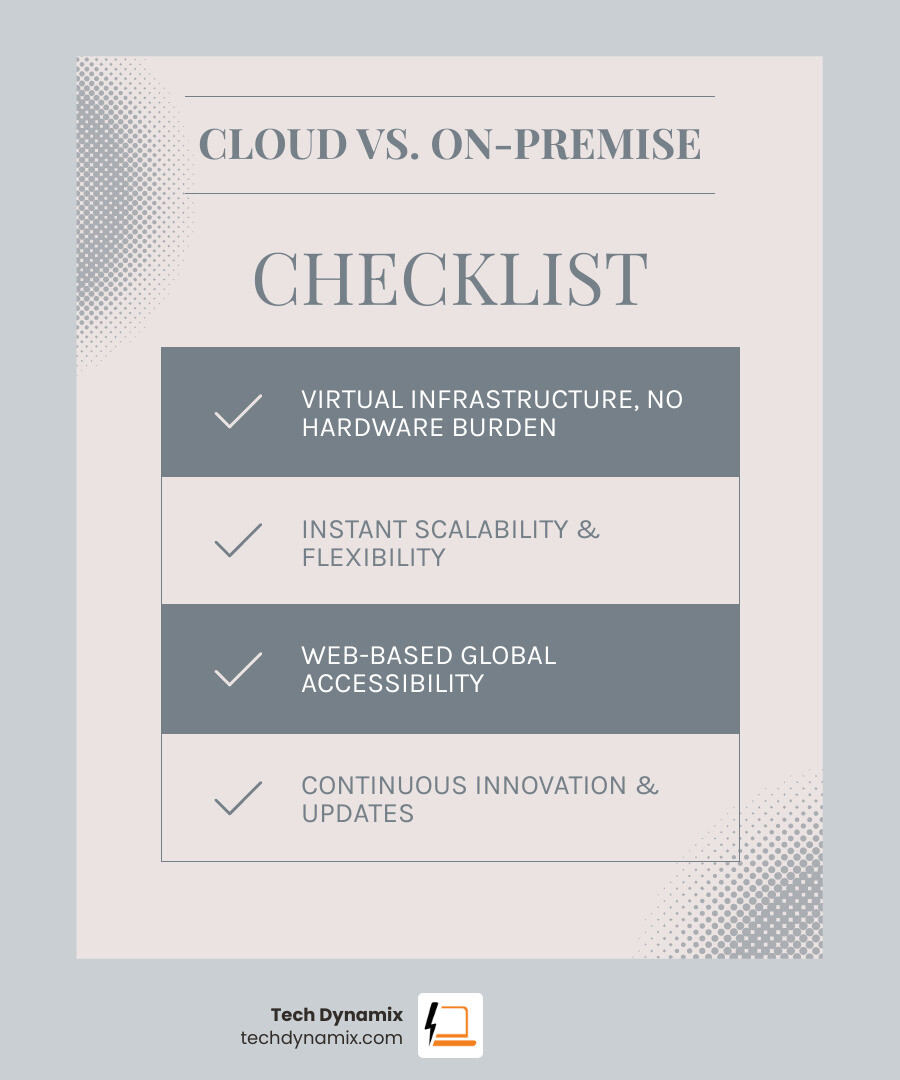
- Virtual infrastructure: All components are hosted by a third-party provider and accessed via the internet. No physical hardware is required on your premises.
- Managed by provider: The vendor handles all maintenance, updates, and security, freeing up your internal IT team for strategic initiatives.
- Instant scalability: Easily add or remove agents, features, or communication channels as needed, often with just a few clicks. This elasticity is perfect for scaling with demand.
- Location-independent: Agents can work from anywhere with an internet connection, supporting remote and hybrid work models effortlessly.
This fundamental shift is why 62% of businesses are planning their move to the cloud within the next 18 months. They recognize the agility and efficiency that cloud solutions offer. For companies leveraging cloud services like Microsoft 365, extending this cloud infrastructure to their contact centre is a natural progression. Our team can help you steer this transition, much like we assist with More info about Microsoft 365 Cloud Support.
The Rise of Contact Centre as a Service (CCaaS)
The increasing popularity of cloud-based contact centre solutions is largely encapsulated by the rise of Contact Centre as a Service (CCaaS). This model delivers the entire contact centre infrastructure and software applications as a subscription service, hosted and managed by a third-party provider.
The top three reasons businesses in Northeast Ohio are embracing CCaaS are:
- Easier to manage and scale: No more worrying about server capacity or software licenses. The provider handles it all.
- Keep software current at all times: Continuous updates mean your contact centre always has the latest features and security patches without manual intervention.
- Continuous feature delivery of advanced capabilities: Cloud providers constantly innovate, rolling out new AI, analytics, and omnichannel tools that would be difficult and expensive to implement on-premise.
The web-based interface is a game-changer, allowing agents and supervisors to access the system from any location with an internet connection. This accessibility is crucial in today’s , digital world, especially when 77% of customers expect to speak with someone immediately when they reach out. CCaaS ensures that your team can meet these expectations with speed and efficiency.
Business Benefits and Agent Productivity
Adopting a cloud-based contact centre solution offers a cascade of benefits for businesses of all sizes, from small startups in Painesville to larger enterprises in Cleveland. The primary advantages often revolve around three key areas: improved IT efficiency, a better customer experience, and improved agent productivity. These aren’t just buzzwords; they translate into tangible business outcomes.
From an IT perspective, moving to the cloud dramatically reduces the burden on internal resources. Instead of managing complex hardware and software, your IT team can focus on strategic initiatives. This improved IT efficiency directly contributes to cost savings and faster problem resolution. We often see this translate into a significant return on investment, as highlighted in studies like the Read TEI study on business benefits. For businesses seeking to optimize their technology investments and align IT with business goals, our More info about IT Consulting & Advisory services can provide invaluable guidance.
Beyond IT, the impact on customer experience is profound. With omnichannel capabilities, AI-powered tools, and seamless integrations, customers receive faster, more personalized service across their preferred channels. This leads to higher satisfaction, increased loyalty, and ultimately, business growth.
Enhancing the Agent Experience
Happy agents lead to happy customers. Cloud-based contact centre solutions are designed with the agent experience in mind, leading to significant improvements in morale, efficiency, and retention.
One of the most striking benefits is the reduction in agent training time. Research indicates a 50% reduction in agent training time is achievable with modern cloud platforms. This is because these systems often feature intuitive user interfaces, consolidated dashboards that provide all necessary customer information at a glance, and AI-powered guidance. Agents spend less time learning the system and more time focusing on solving customer issues.
Consider an agent’s dashboard: it’s no longer a jumble of disparate applications. Instead, it’s a unified workspace that pulls customer history, previous interactions, and knowledge base articles into a single view. This context allows agents to deliver more effective and personalized service, reducing customer frustration and improving first-call resolution rates. The result? Agents feel more empowered and less stressed, which in turn reduces turnover and creates a more positive work environment.
Driving Operational Efficiency
Operational efficiency is where cloud-based contact centre solutions truly shine, offering transformative improvements over traditional models.
Let’s look at a conceptual comparison:
| Feature | Traditional On-Premise Contact Centre | Cloud-Based Contact Centre |
|---|---|---|
| Setup Cost | High (hardware, software licenses, installation) | Low (subscription-based, minimal hardware) |
| Scalability | Slow, complex, expensive (manual upgrades) | Fast, flexible, cost-effective (on-demand scaling) |
| Maintenance | High (dedicated IT staff, patches, upgrades) | Low (managed by provider) |
| Accessibility | Limited (tied to physical office) | High (web-based, remote work enabled) |
| Feature Updates | Infrequent, costly (manual implementation) | Continuous, automatic (provider-managed) |
| Disaster Recovery | Complex, expensive (redundant on-site systems) | Built-in, managed by provider (redundant cloud infrastructure) |
Cloud solutions inherently offer resource automation and real-time monitoring capabilities that streamline operations. Intelligent routing ensures calls are directed to the most appropriate agent, reducing transfer rates and customer wait times. Automation can handle routine inquiries, freeing up human agents for more complex tasks. We’ve seen businesses achieve a 60% reduction in call volume for human agents by effectively deploying self-service options and AI.
Real-time monitoring dashboards provide supervisors with an immediate overview of key performance indicators (KPIs), agent availability, and customer queues. This allows for proactive management, such as adjusting staffing levels or re-routing calls, ensuring optimal efficiency even during peak periods.
Key Features and AI Capabilities
When evaluating cloud-based contact centre solutions, certain features stand out as essential for delivering superior customer service and maximizing operational efficiency. For businesses in Northeast Ohio, these capabilities are crucial for staying competitive and meeting evolving customer expectations.
First and foremost is omnichannel support. This means customers can interact with your business through their preferred channel – whether it’s voice, email, chat, SMS, or social media – and the interaction remains seamless and consistent. An agent can see the full history of a customer’s journey, regardless of how they previously contacted you.
CRM integration is another non-negotiable feature. Tying your contact centre software directly to your Customer Relationship Management (CRM) system provides agents with a 360-degree view of the customer. This context allows for personalized service, faster problem resolution, and even proactive outreach.
Interactive Voice Response (IVR) systems guide customers through automated menus, helping them quickly reach the right department or resolve simple queries without agent intervention. Coupled with skills-based routing, calls are directed to the agent best equipped to handle a specific issue, improving efficiency and customer satisfaction.
Many of these communication functionalities are built upon advanced VoIP (Voice over Internet Protocol) technologies. For businesses considering or currently using VoIP, integrating it with a cloud contact centre is a logical step. Our team at Tech Dynamix has deep expertise in More info about VoIP Systems and can help you leverage these capabilities.
Leveraging AI and Analytics in Cloud-Based Contact Centre Solutions
The true power of modern cloud-based contact centre solutions lies in their ability to harness Artificial Intelligence (AI), Machine Learning (ML), and advanced data analytics. These technologies are not just futuristic concepts; they are actively improving customer experience and business growth today.
- Machine Learning (ML): Powers intelligent routing, predicting which agent is best suited for a customer’s query based on past interactions, sentiment, and agent skills. ML also helps identify trends in customer feedback and agent performance.
- Sentiment Analysis: AI can analyze customer conversations (voice and text) in real-time to gauge their emotional state. This allows the system to prioritize distressed customers or provide agents with real-time prompts to de-escalate situations.
- Predictive Routing: Beyond skills, AI can predict the likelihood of a successful outcome with a particular agent, routing customers to agents who have a higher historical success rate with similar issues.
- Chatbots and Conversational AI: These AI agents can handle a significant portion of routine inquiries, providing instant answers 24/7. This frees up human agents for more complex, empathetic interactions. We’ve seen how effective this can be in reducing overall call volume.
- Natural Language Understanding (NLU): Allows AI systems to understand the intent and context of customer queries, whether spoken or typed, leading to more accurate responses and better self-service options.
By leveraging these AI capabilities, businesses can automate repetitive tasks, provide personalized assistance, and gain deeper insights into customer behavior and operational performance.
Integration and Data Insights
A hallmark of robust cloud-based contact centre solutions is their ability to integrate seamlessly with other business systems and provide actionable data insights. This interconnectedness creates a unified view of the customer and empowers more informed decision-making.
API (Application Programming Interface) and SDK (Software Development Kit) capabilities are crucial for this. They allow the contact centre platform to “talk” to other applications, such as CRM, ERP, and marketing automation tools. This means customer data flows freely, ensuring agents have a “Customer 360” view – a complete profile including purchase history, previous interactions, and preferences.
Reporting dashboards are the windows into your contact centre’s performance. They provide real-time and historical data on key metrics like call volume, average handle time, first contact resolution, customer satisfaction (CSAT), and agent productivity. Customizable dashboards allow managers to track the KPIs most relevant to their specific goals.
Journey orchestration is another powerful capability. By integrating data from various touchpoints, businesses can map and optimize the entire customer journey. This proactive approach allows for personalized, contextual interactions across channels, leading to improved customer satisfaction and loyalty. For instance, if a customer browses a specific product on your website, a cloud contact centre might proactively offer chat support or queue an outbound call with a relevant offer.
Security, Compliance, and Remote Work
For any business, especially those handling sensitive customer information in Northeast Ohio, security and compliance are paramount. When considering cloud-based contact centre solutions, these factors should be at the top of your list. Reputable cloud providers implement robust security measures to protect data and ensure regulatory adherence.
Data encryption is fundamental. All data, both in transit and at rest, should be encrypted using industry-standard protocols. This protects sensitive customer information from unauthorized access. Beyond encryption, providers typically offer features like multi-factor authentication (MFA), role-based access controls, and regular security audits.
Compliance with various regulations is also critical. For example:
- GDPR (General Data Protection Regulation): While European, its principles of data privacy and consent are often adopted globally and are good practice for any business handling personal data.
- HIPAA (Health Insurance Portability and Accountability Act): Essential for healthcare providers in Ohio, ensuring the protection of patient health information.
- PCI DSS (Payment Card Industry Data Security Standard): Mandatory for any business that processes credit card payments, ensuring secure handling of cardholder data.
Cloud providers typically offer certifications and attestations (like SOC 2, ISO 27001) that demonstrate their commitment to these standards. We always advise our clients to thoroughly vet a provider’s security posture and compliance certifications.
Supporting the Remote and Hybrid Workforce
The shift to remote and hybrid work models has accelerated the adoption of cloud-based contact centre solutions. For businesses in Cleveland, Mentor, or Hudson, this flexibility is no longer a luxury but a necessity for business continuity and talent retention.
Cloud contact centres are inherently designed for a distributed workforce. Agents can log in and access all necessary tools and information from anywhere with an internet connection, ensuring global accessibility (meaning, for Ohio businesses, from any location within the state or beyond, if applicable). This eliminates geographic barriers, allowing businesses to tap into a wider talent pool and maintain operations even during disruptions.
Key aspects that support remote work include:
- Zero-disruption: Agents can transition between locations or devices seamlessly, maintaining productivity and customer context.
- Mobile SDKs: Some solutions offer mobile applications or SDKs that extend contact centre functionality to mobile devices, providing even greater flexibility.
- Collaboration tools: Integrated communication tools (chat, presence) allow remote agents to easily connect with supervisors or colleagues for assistance, replicating the in-office collaboration experience.
This adaptability ensures that your customer service operations remain resilient, regardless of where your team is working.
Reliability and Disaster Recovery
In customer service, downtime is unacceptable. Cloud-based contact centre solutions offer superior reliability and disaster recovery capabilities compared to traditional on-premise systems, giving businesses in Northeast Ohio peace of mind.
Cloud providers build their infrastructure with redundancy at every level. This includes:
- Carrier redundancy: Utilizing multiple telecommunication carriers to ensure uninterrupted voice service. If one carrier experiences an outage, traffic automatically switches to another.
- Failover systems: Automatic failover mechanisms ensure that if one server or data center goes offline, another immediately takes over, preventing service interruptions.
- Redundant cloud infrastructure: Data is often replicated across multiple geographically dispersed data centers. This protects against localized disasters and ensures data availability.
Providers typically offer robust uptime SLAs (Service Level Agreements), guaranteeing a high percentage of service availability (e.g., 99.999%). This level of reliability is incredibly difficult and expensive to achieve with an on-premise setup. Cloud contact centres are engineered for resilience, ensuring your customers can always reach you when they need to.
Frequently Asked Questions about Cloud Contact Centres
We often get asked specific questions by businesses in Lake County and Summit County as they explore cloud-based contact centre solutions. Here are some of the most common inquiries and our expert insights.
What are the typical pricing models for cloud contact centers?
The pricing for cloud-based contact centre solutions is typically subscription-based, offering greater predictability and scalability than traditional licensing models. There isn’t a one-size-fits-all answer, as costs can vary significantly based on features, number of users, and usage.
Common pricing models include:
- Per-user/per-month: This is the most common model, where you pay a flat fee for each agent using the system monthly. Prices can range from $15-$150 per user/month, with different tiers offering varying levels of features (e.g., basic, business, enterprise).
- Personal Plan: $10-$30/user/month
- Business Plan: $40-$70/user/month
- Enterprise Plan: $80-$150/user/month
- Pay-as-you-go: Some solutions, particularly those with a strong API/SDK focus, might charge based on usage (e.g., per minute, per interaction, per API call). This offers extreme flexibility but requires careful monitoring to manage costs.
- Feature-based tiers: Providers often bundle features into different plans. A basic plan might include core voice and email, while higher tiers add omnichannel, AI, advanced analytics, and CRM integrations.
When evaluating pricing, it’s crucial to consider the Total Cost of Ownership (TCO). While the monthly subscription fee is visible, also factor in potential savings from reduced hardware, maintenance, IT staff burden, and improved efficiency. We help our clients analyze their specific needs to identify the most cost-effective solution.
How do cloud contact centers handle high call volumes?
One of the standout advantages of cloud-based contact centre solutions is their inherent ability to handle fluctuating and high call volumes with ease. This is a critical capability for businesses that experience seasonal peaks or unexpected surges in customer inquiries.
- Elasticity and Auto-scaling: Cloud infrastructures are designed to be elastic, meaning they can automatically scale resources up or down based on real-time demand. If a sudden influx of calls occurs, the system can provision additional capacity without manual intervention, preventing bottlenecks and dropped calls.
- Queue Management: Advanced queue management systems intelligently hold and prioritize calls, providing customers with estimated wait times, self-service options, or the ability to request a callback.
- Overflow Routing: Calls can be automatically routed to alternative queues, less busy agents, or even external resources if internal capacity is exceeded.
- AI-powered deflection: As discussed earlier, chatbots and conversational AI can handle a significant percentage of routine inquiries, effectively “deflecting” them from human agents and reducing the overall load during high-volume periods.
This dynamic scalability ensures that your business can maintain service quality and responsiveness, even under pressure, without over-investing in infrastructure that sits idle during off-peak times.
Can cloud contact center software integrate with existing tools?
Absolutely! Seamless integration with existing business tools is a core strength of modern cloud-based contact centre solutions. In fact, it’s often a primary driver for adoption, as it creates a more unified and efficient operational environment.
Most cloud contact centre software offers robust integration capabilities with:
- CRM (Customer Relationship Management) systems: This is perhaps the most critical integration. It allows agents to instantly access customer history, contact details, and previous interactions within their contact centre interface. This eliminates the need for agents to switch between multiple applications, improving efficiency and personalization.
- Helpdesk software: Integrates with platforms like Zendesk or ServiceNow to streamline ticket creation, management, and resolution.
- Unified Communications (UC) platforms: Integration with UC tools (e.g., Microsoft Teams, Cisco Webex) allows agents to easily collaborate with internal experts or transfer calls to other departments, enhancing problem-solving and customer satisfaction.
- Email platforms, chat applications, and social media management tools: Ensures all customer interactions across various channels are captured and managed centrally.
- Data syncing: Integrations facilitate the real-time syncing of data between systems, ensuring that all departments have access to the most up-to-date customer information.
Before selecting a solution, check if the software supports integration with your current tools or if custom integrations are possible through APIs and SDKs. Our team at Tech Dynamix specializes in ensuring these critical systems work together harmoniously for our Northeast Ohio clients, creating a truly connected business ecosystem.
Conclusion
The journey to an optimized customer experience for businesses across Northeast Ohio inevitably leads to the adoption of cloud-based contact centre solutions. As we’ve explored, these platforms offer unparalleled flexibility, scalability, and efficiency, fundamentally changing how we engage with our customers and empower our teams.
From the ability to leverage cutting-edge AI and machine learning for predictive insights and automated interactions, to ensuring seamless omnichannel support and robust security, cloud contact centres are designed for the demands of the modern business landscape. They support remote and hybrid workforces, provide superior reliability, and offer transparent, scalable pricing models, making them an intelligent investment for future growth.
At Tech Dynamix, we understand the unique challenges and opportunities facing businesses in Painesville, Mentor, Cleveland, and beyond. We are passionate about helping our clients harness the power of innovation to improve their operations and delight their customers. By partnering with us, you gain a trusted advisor with over two decades of experience in IT consulting and managed services, dedicated to designing and implementing cloud-based contact centre solutions that align perfectly with your strategic goals.
Ready to innovate your customer experience and drive business growth? Let us help you steer the exciting world of cloud contact centres.