What Is a Data Center Facility? (The Short Answer)
A data center facility is a physical building or dedicated space that houses the servers, networking equipment, and storage systems that power the apps, websites, and services your business relies on every day.
Here’s a quick breakdown of what that means in practice:
- What it stores: Business data, applications, email systems, databases, and more
- What it does: Collects, processes, stores, and distributes data across networks
- Who uses it: Businesses of all sizes — from small companies to global enterprises
- Where it lives: On-premises, in a colocation facility, in the cloud, or at the network edge
- Why it matters: Without it, nearly every digital business function stops working
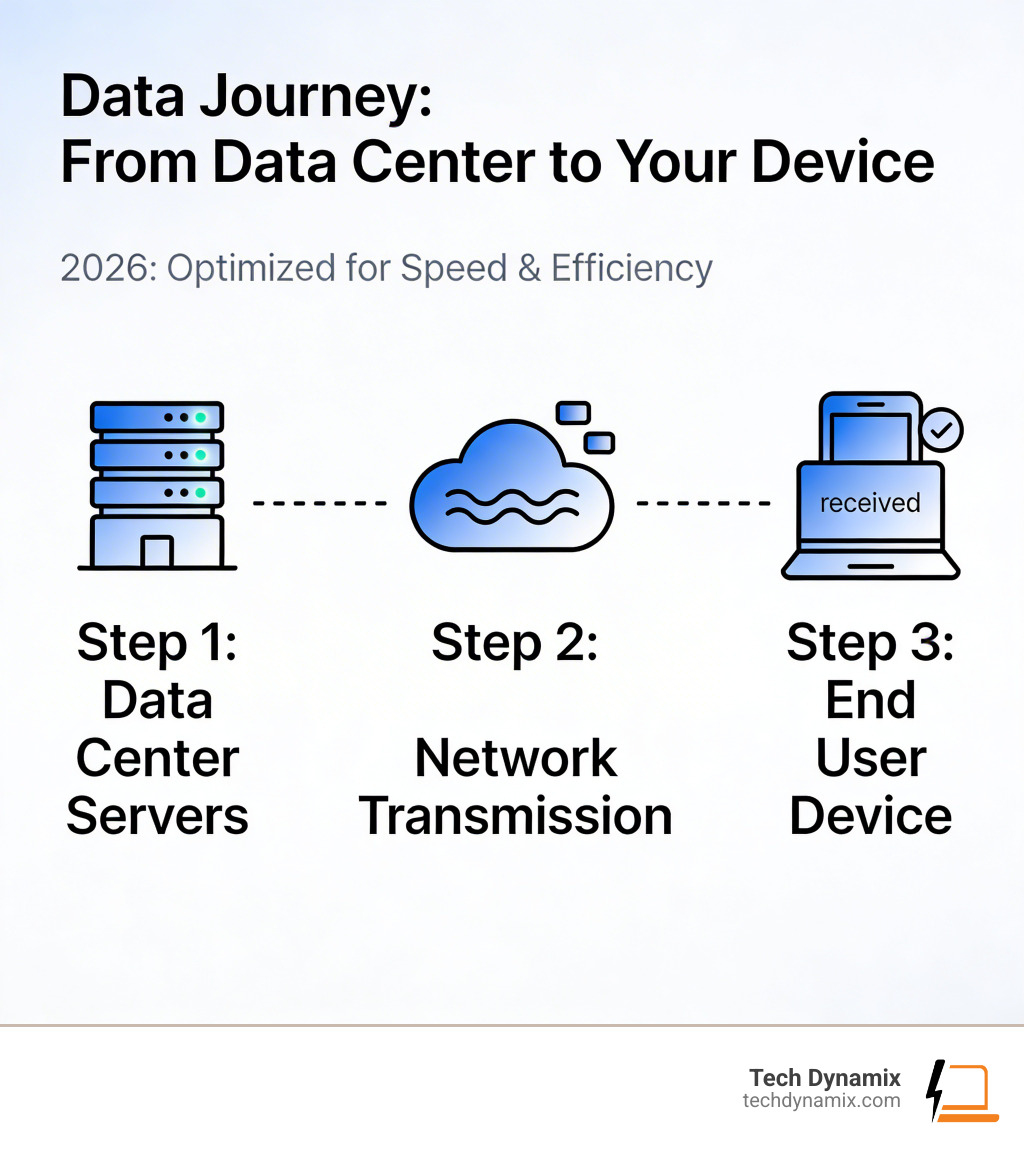
Think of it as the physical backbone of the internet and your business technology — even when everything feels “virtual,” it’s running on real hardware, in a real building, somewhere.
The numbers tell the story. Global data center electricity consumption hit around 415 terawatt hours in 2024 — roughly 1.5% of all electricity used on Earth. IDC projects that 175 zettabytes of data will exist by 2025. That’s an almost incomprehensible amount of information, and it all has to live somewhere.
Data centers are that somewhere.
Whether you’re using a cloud app, sending an email, or running a video call, a data center facility is doing the heavy lifting behind the scenes. Understanding how they work — and why their design, security, and efficiency matter — helps you make smarter decisions about your own business technology.
I’m Jay Baruffa, founder of Tech Dynamix, and with over 20 years of hands-on experience in IT infrastructure design and systems support, I’ve worked closely with businesses across Northeast Ohio to navigate everything from on-premises server rooms to hybrid cloud environments — all of which connect back to how a data center facility is designed and operated. In the sections ahead, I’ll break down exactly how these facilities work, what’s inside them, and why it matters for your business.
Data center facility terms to learn:
The Evolution and Primary Purpose of a Data Center Facility
To understand the modern data center facility, we have to look back at where it all began. In the 1940s, the “data center” wasn’t a sleek, cooled room with glowing blue lights; it was a massive, clunky machine like the ENIAC. This early computer occupied an entire room, required specialized cooling, and was protected by armed guards.
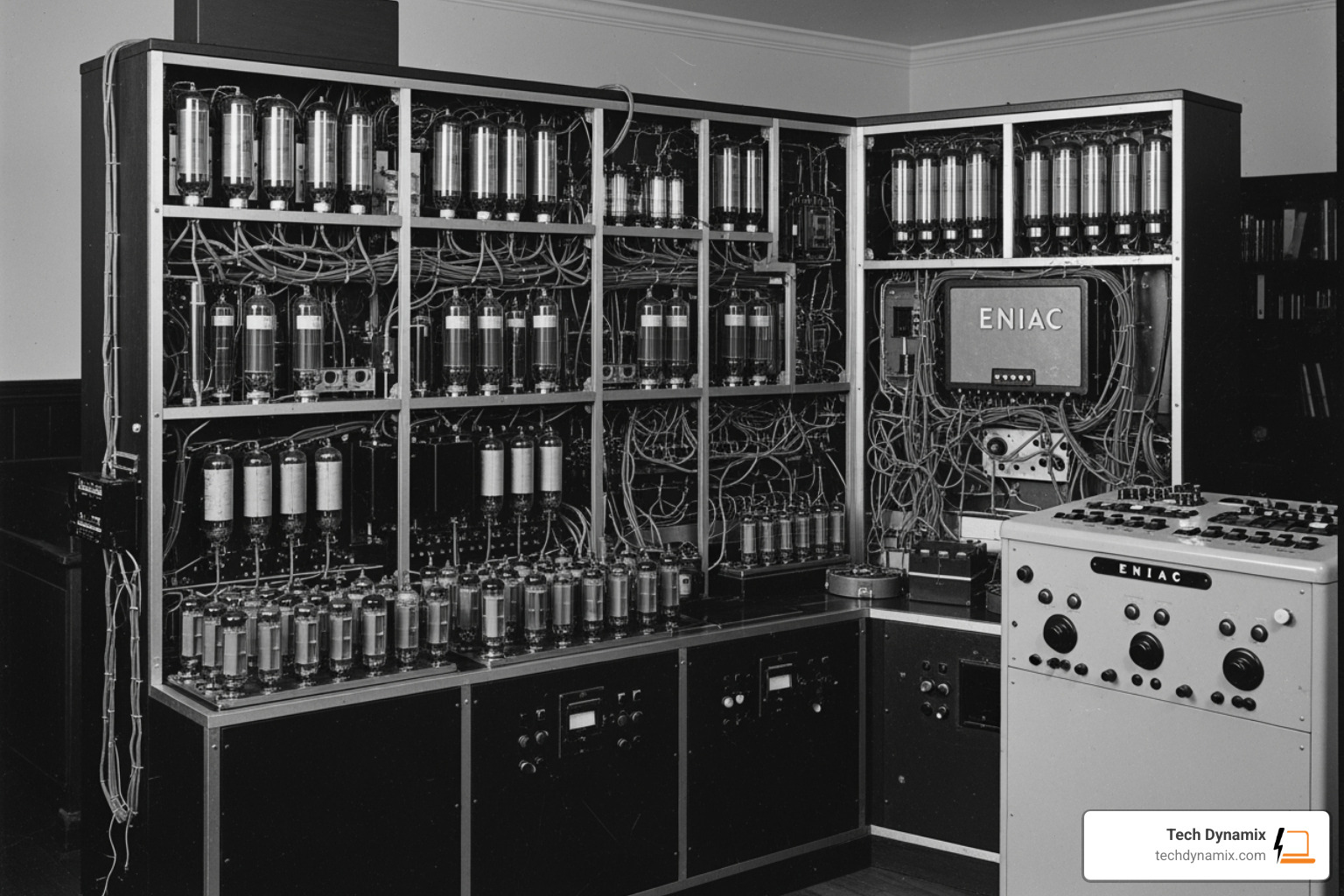
As we moved into the 1950s and 60s, IBM introduced the first raised floors to manage the growing tangle of cables and to distribute cool air more effectively. By the 1990s, the history and evolution of data centers accelerated. Microcomputers began replacing giant mainframes, and the “server room” became a staple of every medium-to-large business in cities like Willoughby and Mentor.
Today, the primary purpose remains the same: to provide a centralized, secure, and reliable environment for computing hardware. However, the scale has changed. We are currently in the era of digital transformation, where data is the most valuable asset a company owns. According to the IDC Data Age whitepaper, the sheer volume of data is exploding. To give you some perspective, if you tried to download 175 zettabytes of data at average internet speeds, it would take you about 1.8 billion years. We don’t have that kind of time, and neither does your business.
Categorizing the Modern Data Center Facility
Not all data centers are built the same. Depending on your business needs in the Greater Cleveland area, you might interact with several different types of data centers:
- Enterprise Data Centers: These are owned and operated by a single company for their own internal use. You’ll often find these on-site at corporate headquarters.
- Colocation Facilities: Here, a business rents space within a third-party facility. The facility provides the building, cooling, power, and security, while you provide the servers. This is a popular choice for businesses in Eastlake or Wickliffe looking to scale without building their own “digital hotel.”
- Cloud Data Centers: These are the massive facilities operated by providers like Amazon (AWS) or Microsoft. You don’t see the hardware; you just access the resources over the internet.
- Hyperscale Data Centers: These are the giants. Think Google or Microsoft facilities that span millions of square feet and house hundreds of thousands of servers.
- Edge Data Centers: These are smaller facilities located closer to the end-users. By keeping the data “at the edge,” they reduce latency for things like IoT devices or real-time streaming.
The Role of AI-Specific Infrastructure
If you’ve checked the news lately, you know that Artificial Intelligence (AI) is the “next big thing.” But AI is hungry—very hungry. It requires specialized infrastructure that traditional facilities weren’t designed to handle.
AI workloads rely on GPU clusters and neural networks that generate massive amounts of heat. This has led to the development of “AI factories.” To power these, companies are looking at new power delivery methods, such as the NVIDIA HVDC architecture, which uses high-voltage direct current to improve efficiency and support the high-performance computing required for machine learning.
Core Infrastructure and Design Considerations
Building a data center facility is a lot more complicated than just putting a few computers in a cold room. It’s an intricate dance of power, cooling, and space management.
One of the most critical design elements is airflow management. We use “hot aisle/cold aisle” containment to ensure that the cold air coming from the air conditioning units goes straight into the server intakes, and the hot exhaust is funneled away immediately. If these two mix, your efficiency drops, and your electricity bill—and the risk of hardware failure—skyrockets.
Optimizing the Data Center Facility for High Density
As we pack more power into smaller spaces, rack density becomes a major challenge. In the past, a server rack might have drawn 2 kW to 5 kW of power. Today, AI-heavy racks can draw over 30 kW.
To handle this, we look toward modularity and open standards. The Open Compute Project (OCP) is a collaborative community focused on redesigning hardware and facilities to be more efficient and scalable. By using open designs, we can speed up hardware refresh cycles and ensure that facilities can handle the projected 175 zettabytes of data coming our way.
Power and Cooling Efficiency
The “secret sauce” of a great data center facility is its Power Usage Effectiveness (PUE). This is a ratio of how much total power the facility uses compared to how much actually reaches the IT equipment.
- Average PUE in the US: 2.0 (meaning for every 1 watt of IT power, 1 watt is wasted on cooling and lights).
- State-of-the-art PUE: 1.2 or lower.
Modern facilities are moving away from traditional Computer Room Air Conditioning (CRAC) units and toward liquid immersion cooling, where servers are literally dunked in non-conductive fluid. This can bring PUE levels down to a record-breaking 1.01. According to IEA analysis on data center energy, global electricity demand from these facilities is projected to double by 2030, making efficiency research more important than ever.
Security, Reliability, and Operational Standards
When you trust a data center facility with your business data, you aren’t just looking for a place to plug in a server; you’re looking for a fortress. Security in these buildings is layered like an onion.
- Perimeter Layer: High fences, security guards, and 24/7 video surveillance.
- Infrastructure Layer: This includes the physical building itself—hardened walls and restricted access points.
- Data Layer: Biometric access control (thumbprints or iris scans) to ensure only authorized staff can touch the hardware.
- Environmental Layer: Sensors that detect smoke, water, or even subtle vibrations from an earthquake.
Fire protection is another huge concern. You can’t just use a sprinkler system; water ruins servers. Instead, many facilities use gaseous fire suppression, which snuffs out a fire by removing oxygen or heat without leaving a drop of moisture on your expensive equipment.
High Availability and Redundancy
In IT, downtime is the enemy. To combat this, we use the concept of “High Availability.” Cloud providers like AWS use “Regions” and “Availability Zones” (AZs) to ensure your data stays online.
- AWS Region: A physical location in the world (like Ohio) where multiple data centers are clustered.
- Availability Zone (AZ): One or more discrete data centers within a region. Each AZ has its own isolated power and water supply.
By spreading your applications across different AZs, you’re protected from local disasters. If a tornado hits one facility in Geauga County, your data is already being served from another facility in Cuyahoga County without a second of downtime.
Compliance and Certifications
How do you know if a facility is actually up to snuff? Look for certifications.
- TIA-942: The standard for data center telecommunications infrastructure.
- LEED: A certification for “green” buildings that meet strict environmental standards.
- ESG Metrics: Large facilities now report on their embodied and operational carbon, helping businesses meet their own sustainability goals.
Sustainability Challenges in the Age of AI
While data centers are the engines of the modern economy, they do have an environmental footprint. The biggest challenge? Water.
A single 100-megawatt data center can use up to 2 million liters of water every day. That’s the same amount used by 6,500 households. This water is primarily used for evaporative cooling—essentially sweating to keep the servers cool. Recent scientific research on the AI water footprint suggests that as AI demand grows, this footprint will only get larger.
To fix this, we are seeing some incredible innovations:
- Renewable Energy: Many facilities are now powered by 100% wind or solar energy.
- Heat Reuse: In colder climates, facilities are being used to heat nearby homes. Stockholm Data Parks has pioneered heat recovery systems that turn server exhaust into residential warmth.
- E-waste Management: Generative AI requires frequent hardware upgrades, leading to more electronic waste. Responsible facilities now have dedicated recycling programs to keep old GPUs out of landfills.
Frequently Asked Questions about Data Centers
What is Power Usage Effectiveness (PUE)?
PUE is the industry-standard metric for measuring energy efficiency. It is calculated by dividing the total power entering the facility by the power used by the IT equipment. A PUE of 1.0 would be a “perfect” score, meaning no energy is wasted on cooling or lighting.
How many data centers are in the United States?
As of March 2024, the United States hosts 5,381 data centers. This is the highest number of any country in the world. Much of this load is concentrated in just 15 states, with Virginia and Texas leading the pack.
What is the difference between a cloud and a colocation facility?
In a cloud facility, you rent the service (computing power, storage). You don’t know or care what the hardware looks like. In a colocation facility, you rent the “real estate” (the rack space, power, and cooling), but you own and manage the physical servers yourself.
Conclusion
At Tech Dynamix, we understand that for small and mid-size businesses in Northeast Ohio—from Mentor to Highland Heights—the “cloud” can feel like a bit of a mystery. But as we’ve seen, every byte of data resides in a physical data center facility that requires constant care, security, and power.
The growth of this industry is staggering. McKinsey projects that global spending on new facilities will reach $49 billion by 2030. This growth isn’t just about big tech; it’s about creating local jobs and supporting the infrastructure that allows a healthcare clinic in Lyndhurst or a manufacturing plant in Painesville Township to stay competitive.
Whether you need help with cloud migration, cybersecurity protection, or just making sense of your current IT setup, we’re here to be your dependable technology partner. We’ve spent over 20 years helping local businesses navigate the complexities of the digital world, ensuring your data is secure, your systems are redundant, and your business is ready for whatever the next zettabyte brings.
Ready to modernize your business infrastructure? Let’s talk about your managed IT needs today.